

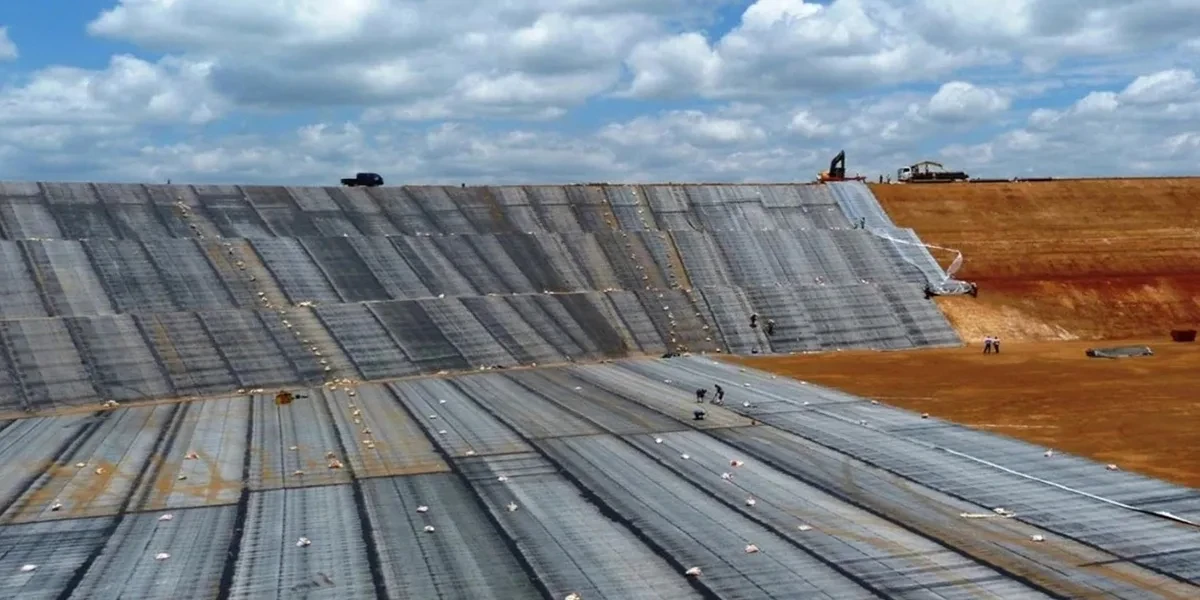
There is something odd about barrier engineering. When it works, nobody notices. No headlines are written about a reservoir that didn't leak or a landfill that didn't poison a borewell three villages downstream.
Failure, though, is loud. A dam face weeping through its joints. Leachate creeping into groundwater. A tailings pond quietly bleeding into a river system.
Different liquids, different industries, one shared question: what are you actually asking to hold that liquid back? Increasingly, the answer across both water resource engineering and environmental engineering is the same material, and the range of bituminous geomembrane applications now stretches from Himalayan power channels to municipal dumpsites in the plains.
Strip away the acronym and BGM is a layered composite, not a plastic sheet. A non-woven polyester geotextile is impregnated with elastomeric bitumen, reinforced with glass fleece for dimensional stability, sanded on top for UV resistance and site grip, and finished underneath with an anti-root film so vegetation cannot punch through from below.
Permeability sits in the order of 10⁻¹⁴ m/s. That is not "low permeability." That is functionally sealed.
The idea also has receipts. Bitumen waterproofed irrigation canals in Mesopotamia around 4,000 BC, and sections of those canals survive today. Modern geomembrane lining technology simply gave a very old material reinforcement, flexibility, and UV stability.
So where does it earn its place? Split the answer the way engineers do, by what you are keeping in and what you are keeping out.
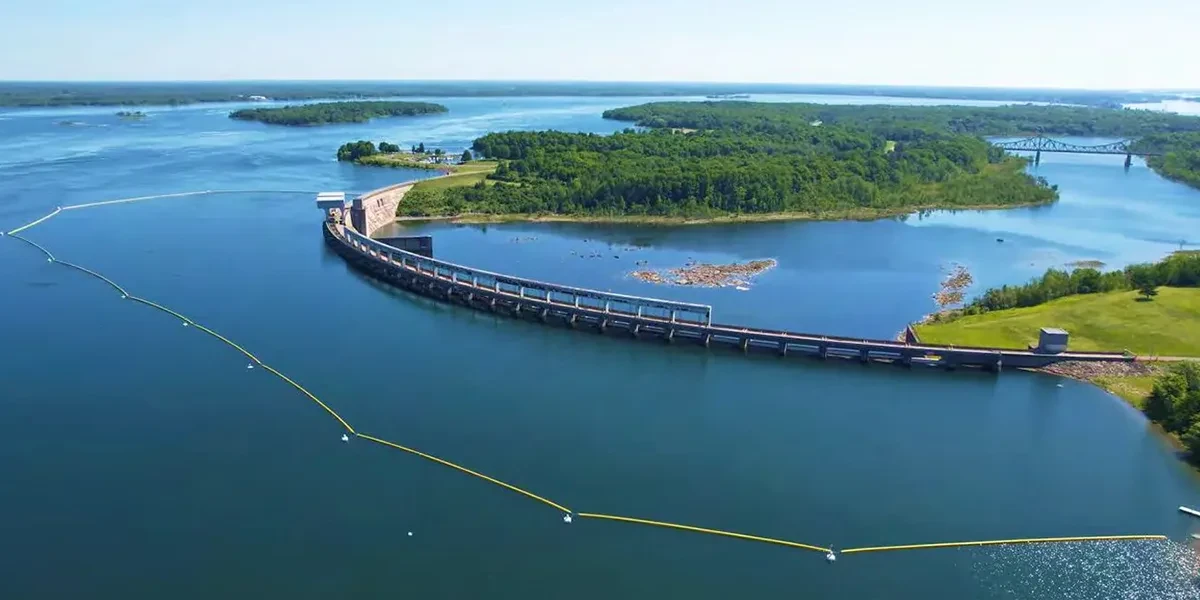
This is the most demanding stage BGM performs on. The membrane goes onto the upstream face as the low-permeability facing element, replacing rigid impervious cores or failing concrete facing.
France's La Galaube Dam remains the landmark reference: roughly 23,000 m² installed from 2000, chosen partly because it was the most economical route with the least environmental impact, since site-excavated mica schist could build the embankment. Engineers there noted two things that matter on every site since. The sheer mass per unit area resisted wind uplift. The very low thermal expansion coefficient stopped wrinkles forming, which made welding cleaner.
It has gone further since. A 23 m roller-compacted concrete water supply dam at El Mauro in Chile used BGM as its upstream facing element, with ultrasonic testing for seam quality control.
For ageing Indian dams losing water through cracked joints, this is the point worth absorbing: water resource engineering rehabilitation does not always mean reconstruction. Sometimes it means re-skinning, and BGM is one of the few waterproofing solutions that can be staged across a single dry season.
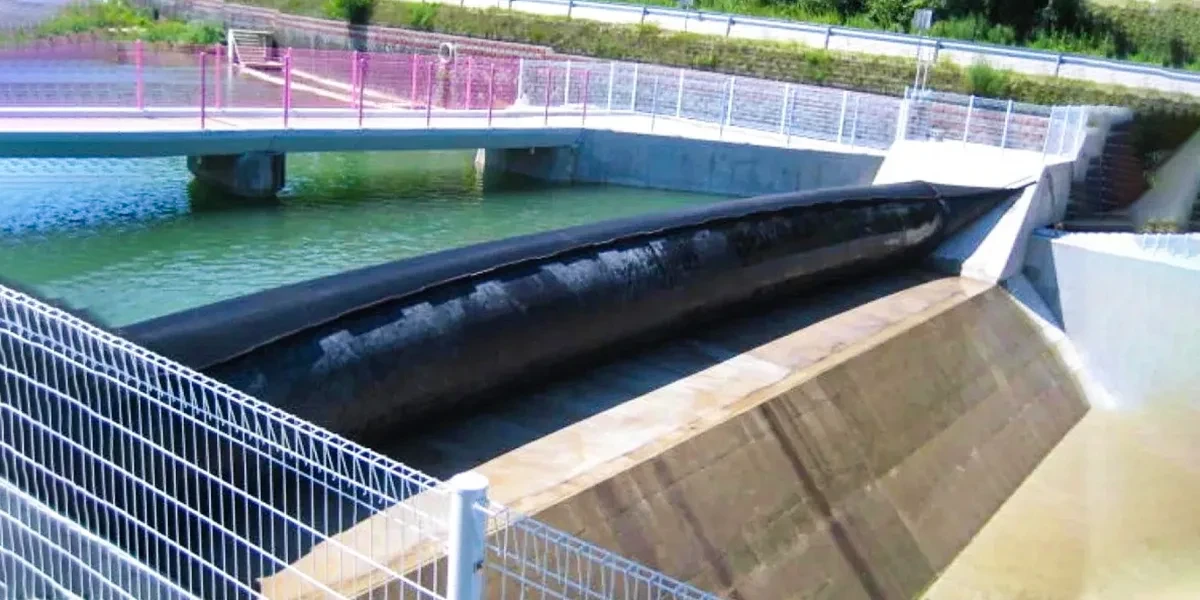
Power channels convert water loss straight into lost generation. Here BGM does something unusual for a liner: its low Manning's coefficient allows higher discharge and reduces sediment deposition through higher flow velocity. It improves the hydraulics rather than merely surviving them.
The timing matters. India is emerging as a global leader in pumped storage, with national plans targeting expansion from roughly 3.5–5 GW today toward 50–57 GW by 2032 and potentially 100 GW by 2035, according to the International Hydropower Association's 2026 World Hydropower Outlook. Upper reservoirs on those schemes are cut into rock at altitude and cycled daily. Leakage is not an inefficiency there; it is a failed asset. Geomembrane lining is the storage guarantee.
Municipal balancing reservoirs, service reservoirs, industrial process ponds, farm ponds. BGM is inert and does not leach substances into stored water, which makes it viable for potable supply, not just industrial containment.
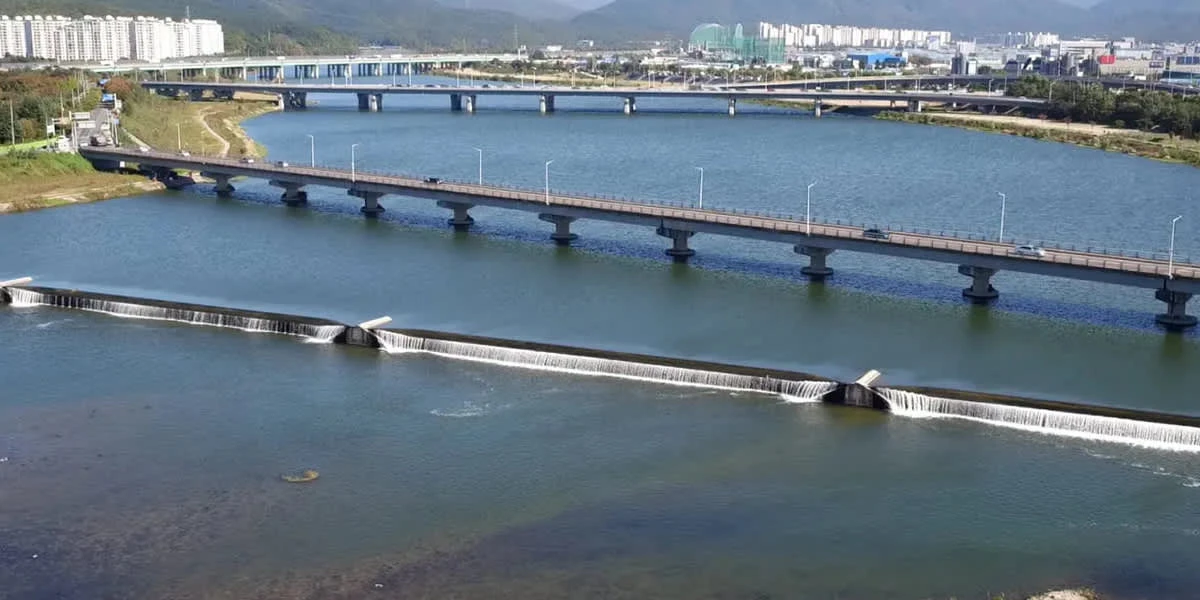
Reservoir rehabilitation is the quieter growth area. Relining restores containment in an ageing structure without decommissioning it. Canal lining, of course, remains the volume application across Indian irrigation, and we have covered that ground separately.
Here the logic inverts. You are no longer stopping water escaping. You are stopping what is inside from reaching everything outside.
India's numbers make the case without embellishment. Research published in 2024 estimates over 1,300 million tonnes of waste occupying more than 10,000 hectares nationally, across roughly 3,084 dumpsites recorded by CPCB, most without liners or leachate collection.
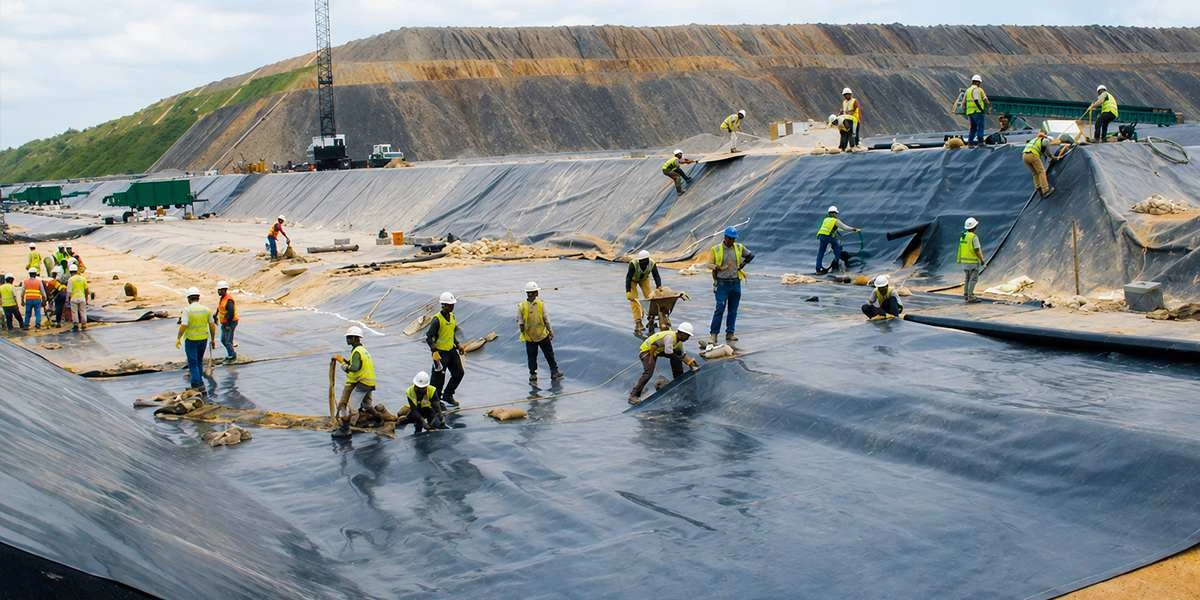
BGM works at both ends of a landfill's life. As a base liner, it blocks leachate migration into soil and groundwater. As a cap, it stops rainfall entering the waste mass and becoming leachate that must then be treated, while containing landfill gas.
Weight is the underrated advantage in capping. BGMs are heavy enough to resist wind and landfill gas uplift, tolerate rough subgrades and cover soils, can be deployed and welded well below 0°C, and their seams can be 100% ultrasonically tested. For legacy dumpsite remediation under Swachh Bharat Mission 2.0, that brief, irregular settlement, rough ground, long exposure, is exactly where environmental engineering teams find polymeric sheets struggling.
Mining containment is chemically aggressive and mechanically brutal. Sharp angular ore, heavy machinery traffic, acidic or alkaline process solutions, seismic loading in some regions.
Puncture resistance is the differentiator. BGM handles rough subgrade without a bedding geotextile in many configurations, removing an entire installation layer and its cost. Its record includes a tailings dam at Cerro Lindo in Peru subjected to a magnitude 8.1 earthquake — a load case no laboratory replicates convincingly.
Treatment lagoons, effluent ponds, chemical storage bunds, fertiliser and process industry basins. The requirement is chemical resistance measured in decades, not seasons, and bitumen is inert to most aggressive leachates and process liquors. This is where environmental engineering compliance and plant economics converge: containment failure is a regulatory event, not just a maintenance one.
Fishponds and shrimp farms need water retention plus stable water quality. The anti-root film prevents vegetation intrusion from below; the inert surface avoids contaminating the stock.
Strip out the marketing and three practical reasons dominate every specification we see.
It forgives the site. Rough subgrade, expansive clay, thermal swing, wind during installation- BGM absorbs conditions that crack rigid linings and wrinkle thin sheets.
It can be verified. Ultrasonic seam testing means quality control is measurement, not trust.
It ages honestly. Documented references run beyond 40 years on dam faces, so behaviour is understood rather than projected.
None of that makes BGM automatic. Budget, terrain, water chemistry and project life all shape the right geomembrane lining choice, and anyone claiming one material wins everywhere is selling, not engineering.
We start with your soil, water chemistry, terrain, exposure and budget — then say plainly whether BGM is the right answer or whether other waterproofing solutions fit better.
Yooil Envirotech has delivered smart water management and environmental infrastructure since 1989, with 400+ projects executed globally and in-house design and execution teams that carry a project from survey to commissioning.
If you are specifying containment for a dam, canal, reservoir, landfill or tailings facility, talk to our engineering team before the tender locks your material in. Across every one of the bituminous geomembrane applications above, that conversation costs less than the repair.