

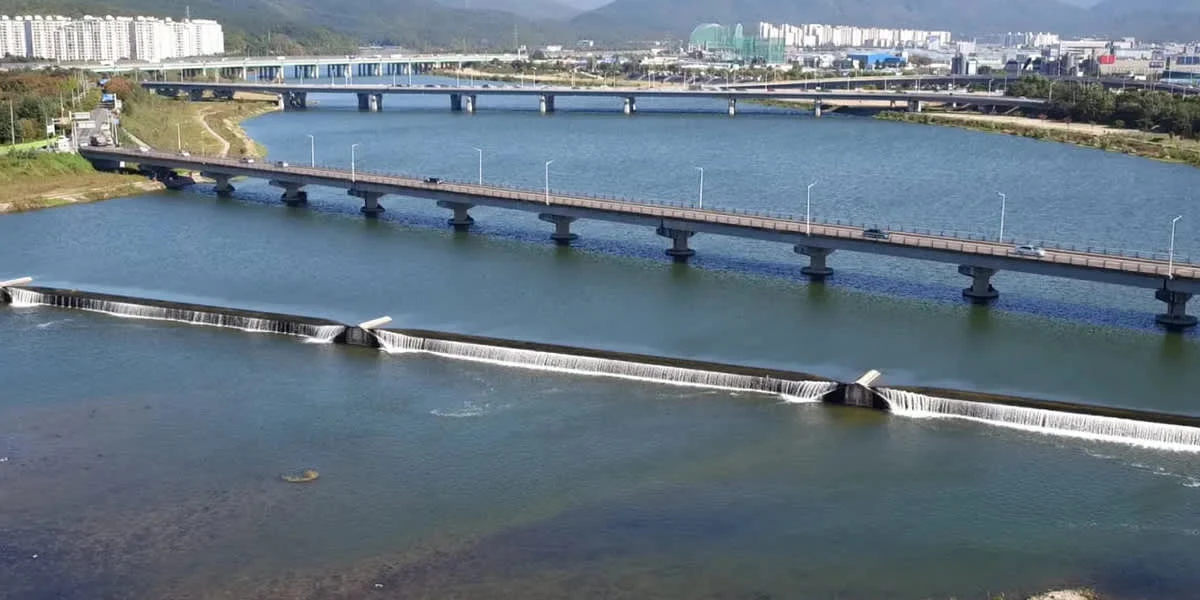
Ask ten engineers how a structure gets selected, and most will describe the same sequence. The reach needs ponding. The department has built barrages. The DPR proposes a barrage. Cost becomes the only remaining discussion.
Nobody in that sequence did anything wrong. Precedent is a reasonable default when time is short. It just is not a site investigation, and a barrage, a weir, and a rubber dam river structure fail in completely unrelated ways once they are in the ground. What follows is not an argument for one of them. It is the five questions that decide, in the order a reach tends to answer them, with a note on where each answer points.
|
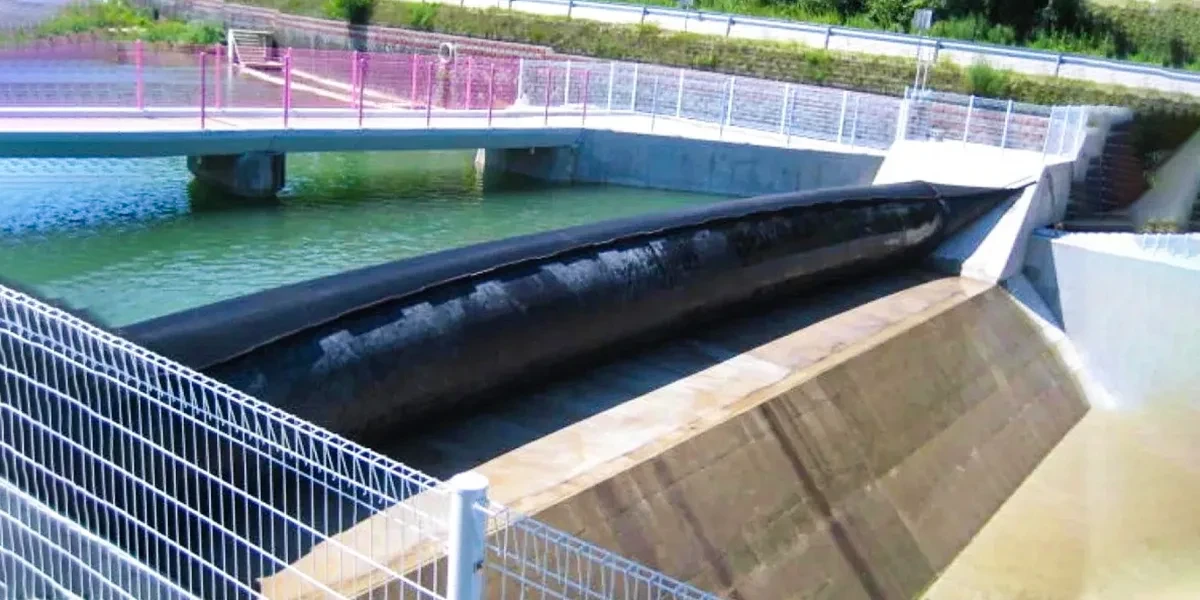
A rubber dam is a bladder of vulcanized EPDM rubber reinforced with nylon fabric, anchored across the bed to a concrete raft by GFRP clamping plates and galvanized fasteners. Air inflates it, and it works as a weir. Air leaves it, and it lies flat while the river runs over it. The short answer to what a rubber dam in river regulation terms is: a weir you can switch off. Over 4,500 units operate worldwide, so the technology is settled, even where local familiarity is not. |
This question is first because it can end the discussion outright. Flexible structures carry practical limits, around six meters of height, with single spans reaching up to 200 meters depending on that height, per design data published in International Water Power. Cross those limits and no amount of operational elegance matters.
Below them, height alone rarely decides anything, and the next four questions take over.
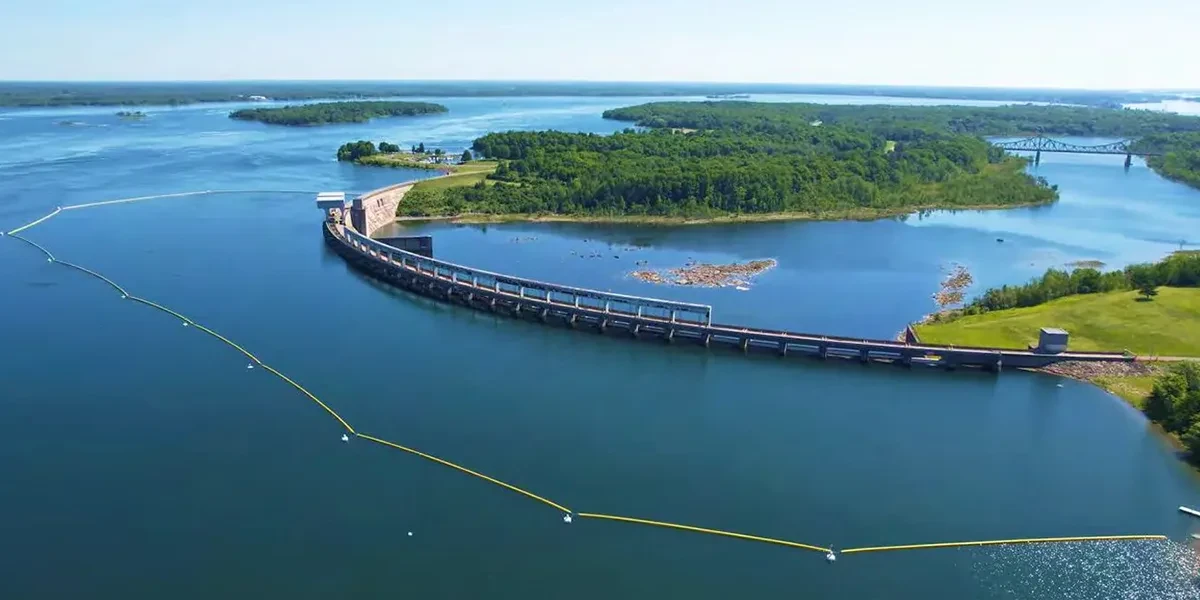
A fixed weir crest is an obstruction on the worst day of the year exactly as it is on the best one. Its afflux is whatever geometry gives it. A barrage can clear the waterway, provided the gates lift when they are asked to.
That proviso carries weight with anyone who has worked a barrage in spate. Harendra Dubey, former Deputy Secretary in the Water Resources Department, Government of Bihar, has pointed out that conventional gates need sophisticated operating arrangements and can seize under high flood pressure, producing panic in precisely the emergency the structure exists to manage. A rubber dam river installation answers this differently, by removing itself. Deflation takes thirty to forty minutes and leaves the channel effectively unobstructed, which is why afflux stays minimal.
Structure selection is quietly a staffing decision, and this is where the practical side of what is rubber dam in river operation terms becomes obvious. Barrages need trained operators, hoist maintenance, gate servicing, and standby power that has to be available at the hour the river rises rather than at the hour the maintenance contract renews. Departments are stretched thin on all four.
Rubber dams need small blowers, no lifting machinery, and no moving components at all. Power draw is low enough that solar covers it. Where a department prefers instruments to inspection rounds, SCADA integration reports water level and pressure continuously, so a slow deviation is caught in week one rather than year seven.
Indian rivers move a great deal of material, and a structure that cannot pass it becomes a maintenance liability within a decade. Weirs accumulate silt upstream with no mechanism to release it. Barrages flush through their gates, assuming the gates work. A deflated bladder lets the river flush its own bed through the natural channel, which is one of the reasons seasonal operation suits Indian hydrology so well.
Land is where projects die. Permanent structures impose permanent submergence, and the acquisition arithmetic frequently outlasts the engineering. Seasonal ponding changes that arithmetic because the pond exists only for the months it is needed.
This is also where a rubber dam for water storage tends to be specified with recharge objectives rather than irrigation alone. Sustained post-monsoon ponding recharges aquifers through a period a permanent structure cannot manage selectively.
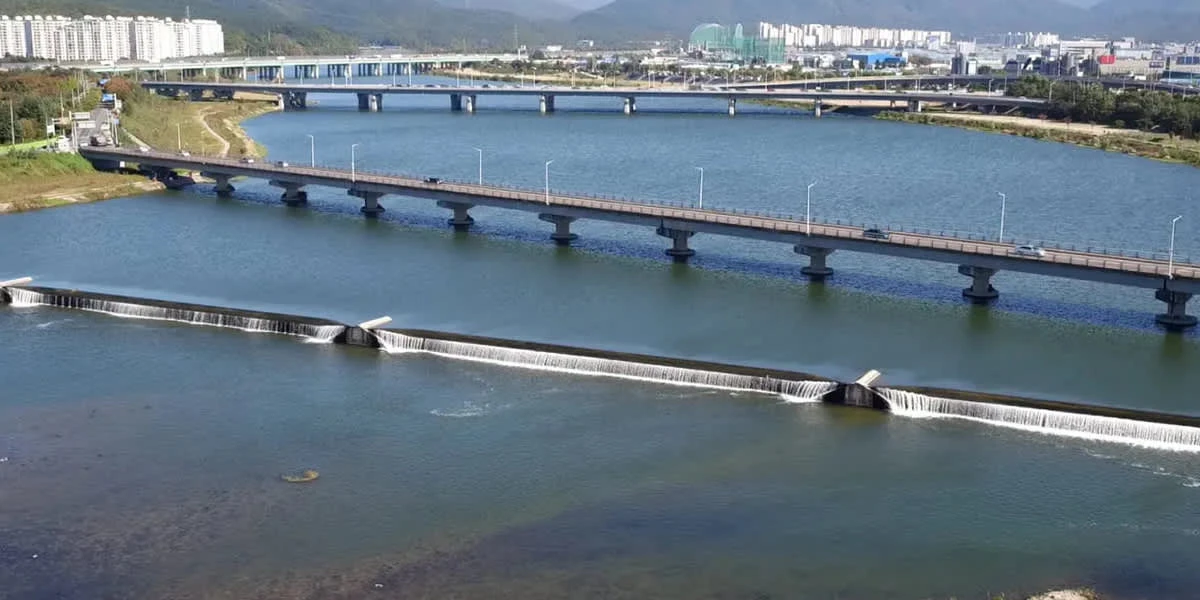
There is a fourth answer that is not a choice between structures. A rubber dam for water storage can sit on an existing weir or spillway crest and raise effective storage without touching what is underneath.
Gujarat is building exactly this. The Rajvasana project on the Heran river in Chhota Udepur district, reported in July 2026 at a cost above 82 crore rupees, is designed to lift the storage of an existing weir to nearly 3.5 million cubic meters and irrigate around 3,420 hectares across 25 villages. An asset the state already owns gains capacity instead of being replaced. For departments holding a portfolio of ageing weirs, this is worth more attention than it currently gets.
The move toward rubber dam in India has less to do with novelty than with fit. Flows are sharply seasonal, silt loads are heavy, submergence is politically expensive, and operating manpower is thin. A structure that stands for one season and lies flat for the rest answers all four constraints at once. Planners following deployment frameworks for these structures generally track guidance issued through the Central Water Commission. Most rubber dam river projects in the country sit on this profile, on reaches where a barrage is oversized and a weir too rigid.
None of the five answers survives a structure supplied to a catalogue size. Span, head, afflux ceiling, sediment profile, and operating capacity are different on every reach, and undersizing shows up years later as wear rather than as a commissioning failure.
YOOIL Envirotech has worked in this field since 1989, delivering more than 400 projects, including installations at Gorakhpur and Sihora operating under Indian sediment and monsoon conditions. Design and execution stay with one in-house team from inception through commissioning, so the structure is engineered to a need rather than selected from a size chart. Domestic manufacturing under Make in India also settles a question that arrives much later: whether a rubber dam in India can be supplied a replacement component in year eighteen without an import inquiry against a discontinued product.
Barrage, weir, and rubber dam are answers to different questions. The costly error is answering by precedent and discovering the site had a different reply. Ruling a rubber dam river structure in or out belongs at reach data stage, not at tender stage.
|
Before the DPR is drafted, settle these Design head required, measured against the six-meter ceiling Flood hydrograph, permissible afflux, and how fast the waterway must clear Annual sediment load and how it will be passed downstream Submergence area you can realistically acquire Operating manpower and power availability during peak season Whether an existing weir on the reach could be raised instead of replaced |
With those six settled, the structure usually selects itself. YOOIL Envirotech reviews reach data at this stage and arranges site visits to commissioned installations where officers can watch one inflate and deflate before anyone discusses commercial terms.
References
Height and span design limits, International Water Power. Rajvasana rubber dam, Heran River, Chhota Udepur, Gujarat, cost and command area as reported July 2026. Testimonial of Harendra Dubey, former Deputy Secretary, Water Resources Department, Government of Bihar. Company, project, and technology data, yooil.co.in, accessed August 2026.