
Water shapes land. It feeds fields. It builds communities. It keeps life moving. This is why a canal system must work well from the very start. When water enters a canal, it should stay there and reach the farms or towns that depend on it. But in many places, much of the water seeps into the soil before it ever reaches its destination. This loss happens quietly. And it keeps growing with time.
Canal lining solves this simple but serious problem. A good lining can turn a slow, leaky canal into a clean, steady waterway. But not all canal lining materials work the same. Some are strong. Some are flexible. Some are affordable. Some last long. The choice depends on what the land needs, how deep the canal is, how fast the water flows, and the long-term plan.
This blog walks through the common canal lining types in a relaxed, easy way. It lays out their strengths and limits. And then shows how Yooil Envirotech brings modern, long-lasting canal lining solutions to India’s irrigation and water projects.
When a canal lacks a lining, water leaks through the bed and the walls. This is basic soil behaviour. Even compact soil cannot stop seepage for long. As water continues to escape, the canal's flow weakens. Pumps work harder. Fields receive less water. Land near the canal becomes wet and soggy. Some places even see weed growth and mosquito issues.
Once a canal is lined, the change is clear.
Water stays where it should.
Farmers get a steady supply.
The command area expands.
And maintenance becomes easier.
A lined canal also avoids soil erosion. When unlined canals flow at high speed, the water eats away the sides. A lining protects the shape, depth, and design. This is why most modern irrigation systems now use lined canals instead of depending on bare soil.
There is no single perfect lining for all sites. The right choice depends on soil, cost, water volume, and project goals. Let us explore the main canal lining options that engineers and developers still use today.
Concrete lining is a classic choice. It has been used for decades in major irrigation networks. Concrete provides a strong structure for the canal and maintains its shape for many years.
Concrete lining works well when the canal carries a heavy daily flow of water. It allows fast flow and prevents seepage almost fully.
But concrete has some limits too. It is costly, takes time to install, and can crack when soil shifts due to weather or ground movement. Repairing these cracks also needs skilled labour. Concrete is ideal for large canals, but it can be too expensive for smaller ones.
Earthen lining is the simplest type. It uses soil or clay found near the site. Sometimes a little cement is mixed in to make it harder. These types of canal lining work best where budgets are tight or canals carry low water volumes.
The cost is low. The work is easy. But the benefit does not last long. Earthen linings seep a lot. They break down with heavy flow. They erode after a few seasons. And they demand regular repair. Earthen lining helps only when the need is short-term.
Some canals use brick or tile lining. Bricks create a neat structure and help reduce seepage more than soil. The layout is simple, and the canals stay clean.
But brick lining can shift in soft soil. It can also loosen over time when water flows at a high speed. This option still works in rural areas but is fading as better materials enter the market.
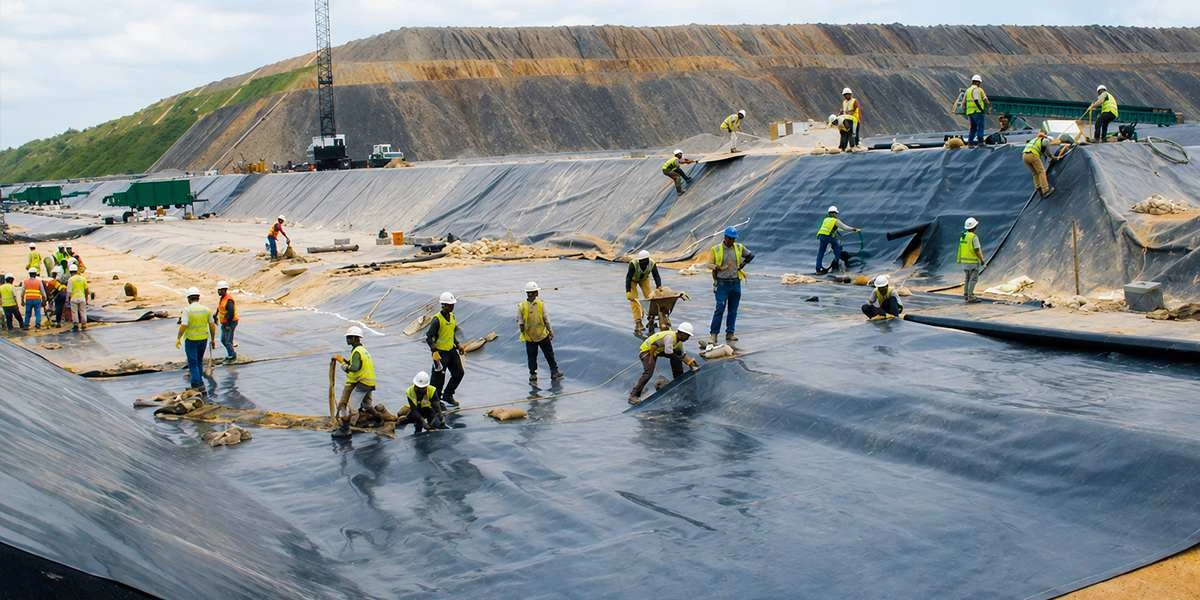
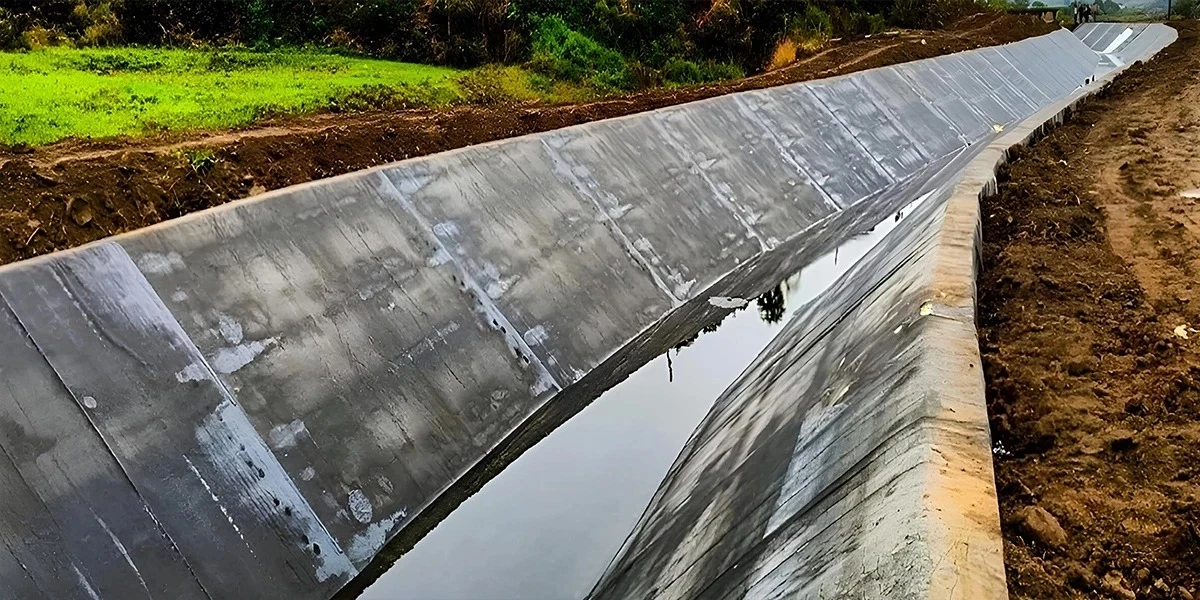
Geomembrane lining has become a top choice in today’s water projects. These are flexible sheets made from materials like HDPE, PVC, or bituminous geomembrane. They stop seepage almost completely. They bend and stretch with the ground. And they handle sunlight, chemicals, and temperature changes.
One of the biggest strengths of geomembrane lining is its speed of installation. The sheets cover long stretches without heavy machinery. This makes them perfect for canals in remote areas or uneven terrain.
Maintenance is low. Lifespan is long. And the savings on water loss are huge. This is why geomembranes are now used in India, Korea, the Middle East, and many other regions facing water scarcity.
Hybrid systems mix two or more lining methods. A common hybrid design places a geomembrane layer under thin concrete or tiles. This gives the canal both strength and flexibility. Another version puts a geotextile fabric under the soil. This reduces erosion and slows of flow.
Hybrid systems are very useful in areas where soil shifts often. They can also lower project costs by using less concrete while still providing a tough, long-lasting finish. Many large irrigation bodies now prefer hybrid solutions for long canals.
Yooil Envirotech works across many water sectors. The company is known for advanced water-control systems, gates, barriers, and canal lining solutions. Their canal lining work is focused on long-term performance and real water savings.
Yooil’s strength lies in its deep study of the site. Before choosing any material, the team checks the soil, expected flow, seepage, and the project's lifespan. This ensures the lining does not fail after a few years.
Yooil offers:
The company has experience in flood control, irrigation, water diversion, and embankment protection. This gives Yooil a clear understanding of how water behaves in real conditions.
Here are a few simple questions that help project owners select the correct canal lining.
Geomembranes work well for most of these conditions because they control seepage almost fully and adjust to soil movement. Concrete is best for fixed, stable canals. Hybrid systems give balance where the ground is uneven.
The right lining improves the entire irrigation plan. It also avoids significant future repair costs.
Canal lining may look like a simple step, but it has a big impact on the success of water systems. Every lining type has a place. Concrete gives solid strength. Soil lining gives a low upfront cost. Brick gives a neat finish. Geomembranes and hybrid systems deliver long-term value, high water savings, and better performance across many terrains.
Most modern irrigation projects now use newer materials, such as geomembranes, because the results are clear. They lose less water. They stay strong for years. And they work well even when the ground shifts.
Yooil Envirotech brings these solutions to the table with a mix of engineering and real-world field experience. Their work helps reduce seepage, improve flow, and support better water use across India.