

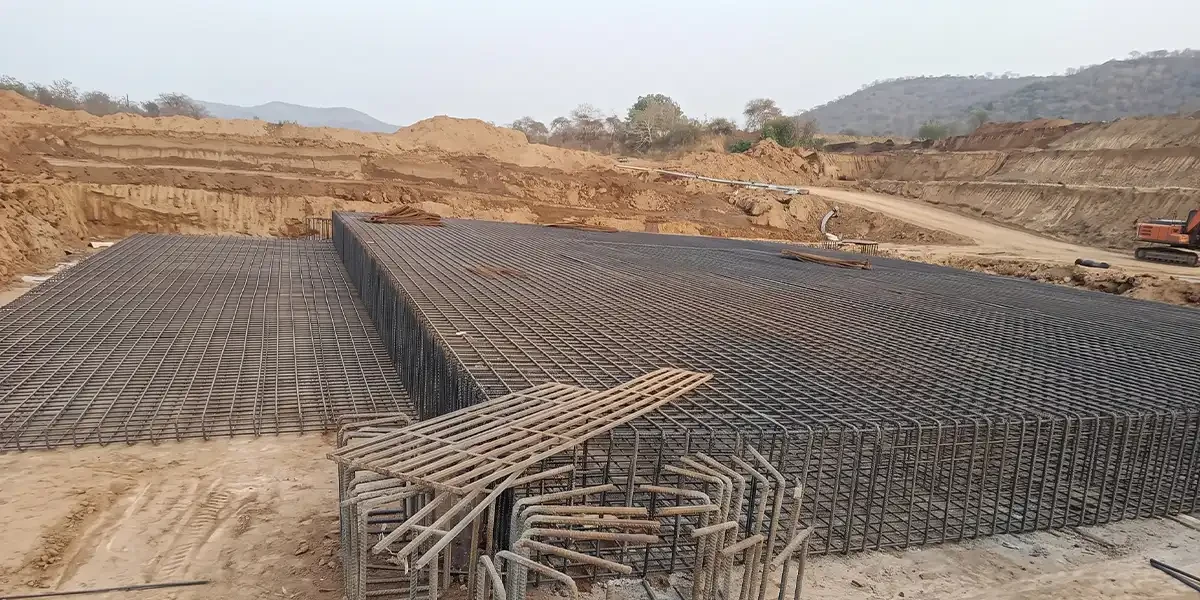
Picture this. June. Somewhere in eastern Uttar Pradesh, an executive engineer is standing on a concrete raft, staring at a rubber dam that will not hold pressure. The monsoon is eleven days away. The supplier is on a call, blaming the fabricator. The fabricator, in another country, is blaming the fabric mill. And the river? The river is not on the call. The river does not attend meetings.
That scene plays out more often than this industry likes to admit. And here is the uncomfortable part: the seam that failed did not fail on that raft. It failed months earlier, inside a curing press nobody was watching. Which brings us to the real subject of this piece. Not rubber. Ownership.
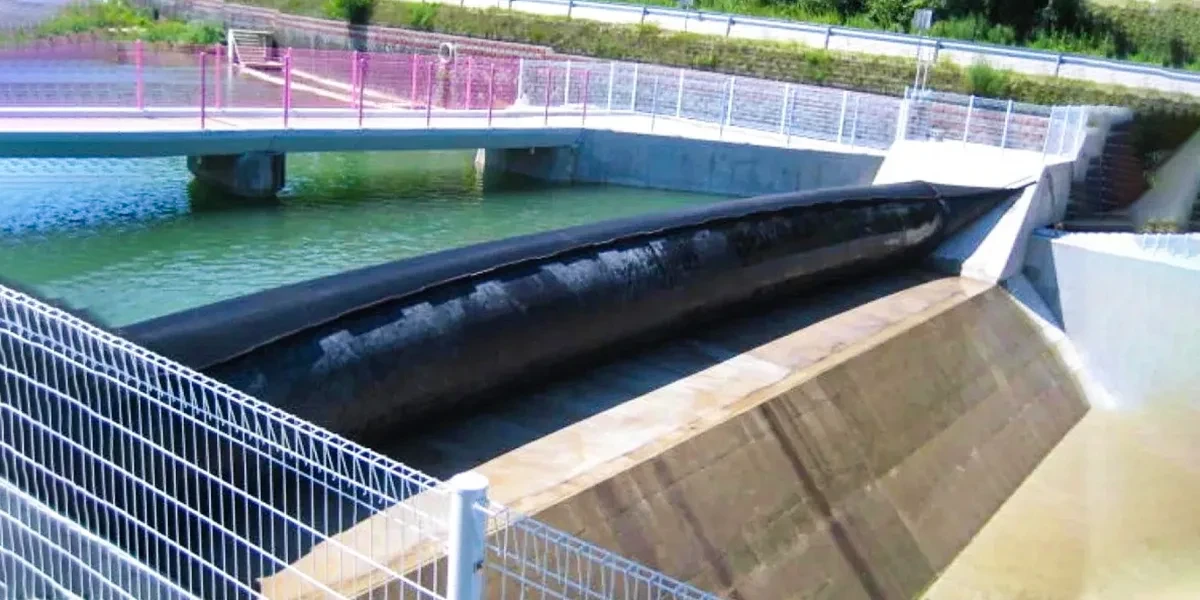
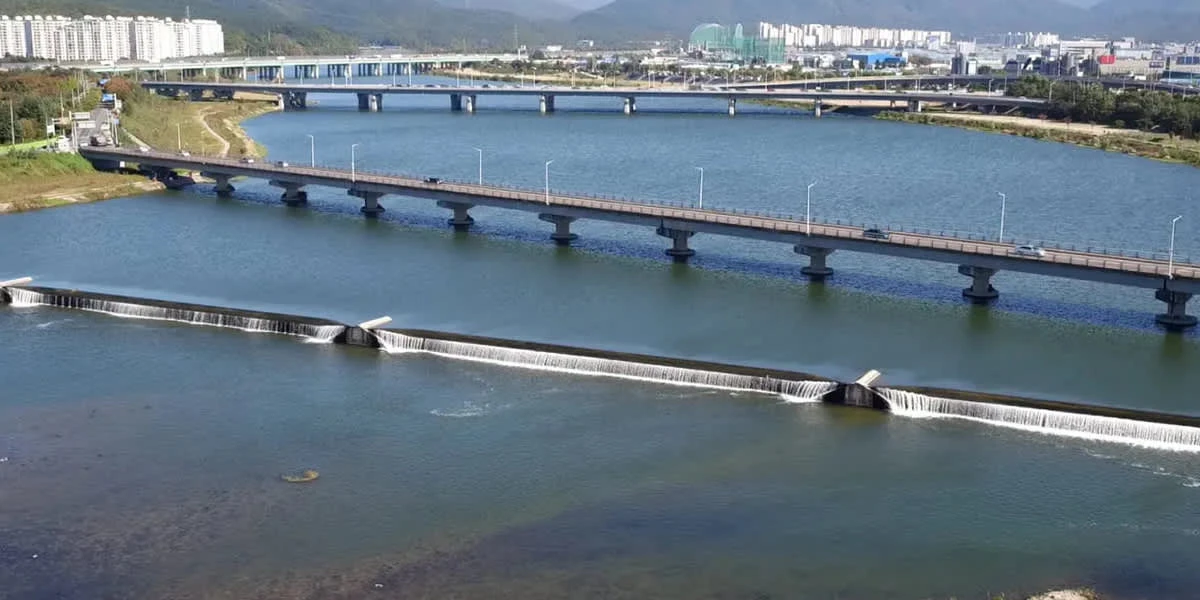
Strip away the hydraulics jargon and a rubber dam is a startlingly honest product. One vulcanized body of EPDM rubber and nylon reinforcement, clamped to concrete, inflated by a blower, standing between a river and everything downstream for 25 to 30 years. Over 4,500 of them are in service worldwide. YOOIL alone has delivered more than 400 rubber dam projects since 1989, from Korean rivers to the Gorakhpur and Sihora sites here in India.
But notice the asymmetry. Three decades of service. Roughly a month of fabrication. Every gram of that 30-year reliability gets baked in, literally, during a few weeks of rubber dam manufacturing. There are no mid-life corrections. You cannot re-cure a seam that is already underwater. So the only question that matters at procurement stage is brutally simple: during those few decisive weeks, who was in the room?
A good chunk of the market runs on what can politely be called the assembly-of-logos model. Design consultancy in one country. Fabric from a mill in a second. Fabrication in a rented plant in a third. A marketing office, usually the one you actually spoke to, in a fourth. Four letterheads, one crate.
Each handoff shaves something off. A tolerance here. A cure log that nobody archived there. A substituted fabric denier that was almost equivalent. Individually, trivial. Cumulatively, a bladder that creeps under hydrostatic load in year six instead of year twenty-six. And when it does, accountability scatters like the supply chain that built it. Indian irrigation departments that have sat through multi-party arbitration over a jammed steel gate already know this pain. The outsourced rubber dam simply imports it.
In-house rubber dam manufacturing is not a marketing flourish. It is a structural decision about where accountability lives. Put design, compounding, calendering, curing, and testing under one roof, as YOOIL does with its integrated design and execution teams, and three quiet revolutions follow.
EPDM is the backbone of a serious dam body for hard physical reasons: it shrugs off ozone, UV, and temperature swings from minus 40 to plus 120 degrees Celsius. On paper, anyway. In practice, those properties belong to a specific compound recipe, a specific fabric, a specific adhesion value between plies. In-house production means every incoming lot gets pulled, stretched, aged, and torn in the lab before it touches a calender. Outsourced production means trusting a mill certificate. One of these is quality control. The other is optimism with a stamp.
Vulcanization is unforgiving chemistry. Overcure and the body embrittles. Undercure and the seams creep. The window is narrow and the press does not negotiate. When the presses are yours, every cycle is logged against the project file and a bad cure gets scrapped, quietly, at your own cost. When the presses are rented, scrapping a cure means paying twice for machine time, and suddenly the manufacturing process develops a very human tendency to call marginal cures acceptable. Rubber dam quality is rarely lost in a dramatic failure. It is lost in a hundred small decisions like that one.
The Rapti does not behave like the Hiran. Silt load, afflux limits, debris, span, head: all different. Engineered rubber dams are therefore built panel by panel to a site's hydrology, and site data has an annoying habit of changing after the survey. When designers and fabricators share a corridor, an extra abrasion ply or a revised anchor detail is a Tuesday. When they share only a purchase order, it is a variation claim.
Here is the fact that should sit at the top of every Indian tender evaluation: this country receives roughly 75% of its annual rainfall inside four monsoon months. Miss the pre-monsoon installation window and you have not delayed a project. You have deleted a year. A year of recharge, of irrigation, of generation, gone.
Now run the numbers on domestic rubber dam production. Body installed within about two weeks of the raft being ready. Full inflation or deflation in 30 to 40 minutes. Blower loads small enough for solar. No hoists, no lifting gear, no gate to jam mid-flood. Add Make in India economics: rupee pricing, zero forex exposure, replacement panels in days instead of shipping quarters, and service engineers who reach the site before the water level changes its mind. Then add the intangible that outlasts every spec sheet: when the manufacturer, designer, and installer share one legal identity, your warranty has exactly one address. YOOIL has put that model behind 400 plus projects across four continents.
Buy a rubber dam and you are not really buying rubber. You are buying the discipline of the building that made it. Thirty monsoons will interrogate every seam, every cure log, every shortcut somebody did or did not take in a factory you will probably never visit. So visit it, at least on paper. Ask who compounds the rubber. Ask who owns the presses. Ask whose name is on both the test certificate and the warranty. If those answers all point to the same roof, the next three decades get considerably more boring. In water infrastructure, boring is the entire point.