

Picture this. A landfill in Maharashtra leaks toxic leachate into groundwater serving 40,000 villagers. The cleanup bill? Around ₹120 crore. The real cost? Decades of contamination nobody signed up for.
This is precisely why BGM Liner Installation has quietly become the backbone of India’s containment engineering. According to a 2023 report by the Central Pollution Control Board, nearly 3,159 dumpsites across India remain unlined or poorly lined, threatening soil and water systems daily. The fix isn’t complicated. But it has to be done right.
At Yooil Envirotech, we’ve watched this industry mature from amateur tarpaulin patchwork to precision-engineered Bituminous membrane systems. So what actually happens when our crew rolls onto your site? Let’s walk through it.
Here’s something most engineers won’t tell you upfront. Traditional HDPE liners crack. They puncture. They struggle in India’s brutal temperature swings, which can range from 4°C in northern winters to 48°C in Rajasthan summers, creating thermal stress most synthetic liners simply cannot handle gracefully over a 20-year design life.
The global geomembrane market hit USD 2.9 billion in 2023. India’s share is growing at roughly 8.4% CAGR, driven by mining expansion, wastewater mandates, and tighter MoEFCC norms. Within this surge, Bituminous membrane technology is grabbing serious attention.
Why? Because it’s puncture-resistant. It’s self-healing under heat. And honestly, it just lasts longer.
A standard Geomembrane liner relies on plastic polymers. A BGM combines a non-woven polyester reinforcement with elastomeric bitumen, creating a composite that behaves more like asphalt than plastic. The result is a sheet that handles substrate movement, accommodates minor settlement, and resists root penetration in agricultural reservoirs across Punjab and Haryana with remarkable consistency.
Think of it like this. HDPE is a raincoat. BGM is a leather jacket. Both keep water out. Only one survives a decade of abuse.
Most failed installations? They fail before the first roll is unwrapped. Site preparation isn’t glamorous, but it’s where 70% of long-term performance is decided.
Our pre-installation checklist includes geotechnical surveys, subgrade compaction tests, anchor trench design, and drainage layout. We don’t cut corners here. Ever.
Before any waterproofing Geomembrane touches the ground, the subgrade must be compacted to a minimum of 95% Standard Proctor density, smoothed to remove any object larger than 25mm, and shaped with gradients between 2% and 33% depending on application type, whether it’s a tailings pond, canal lining, or municipal landfill cell.
Sharp stones get removed. Tree roots get extracted. Soft spots get reinforced with engineered fill.
Skip this step, and you’ve basically pre-funded your own repair bill.
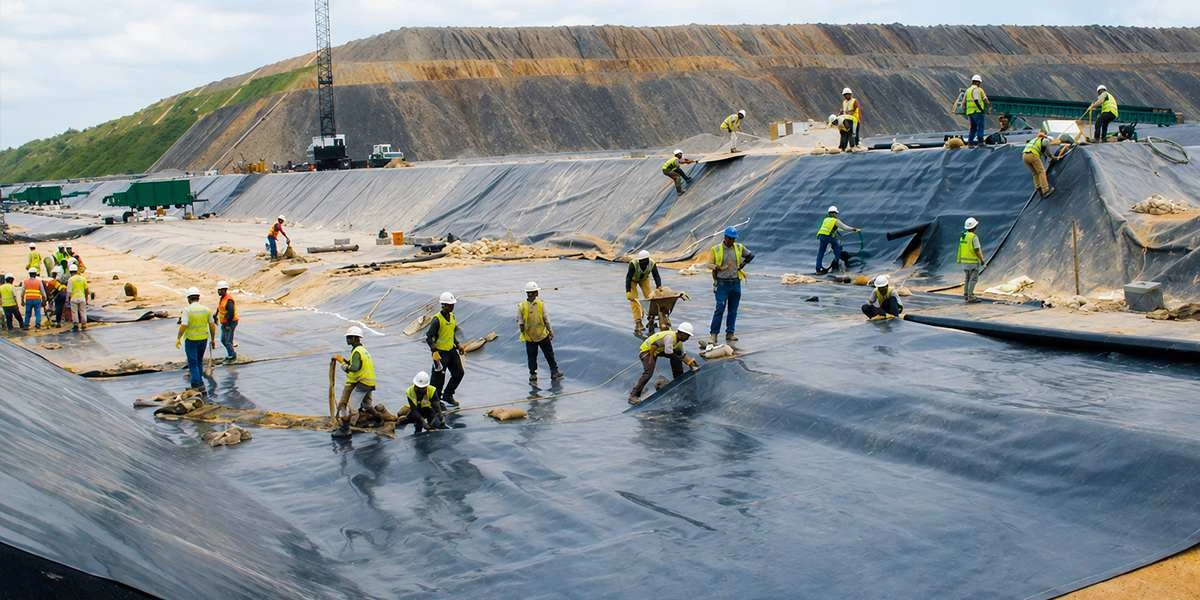
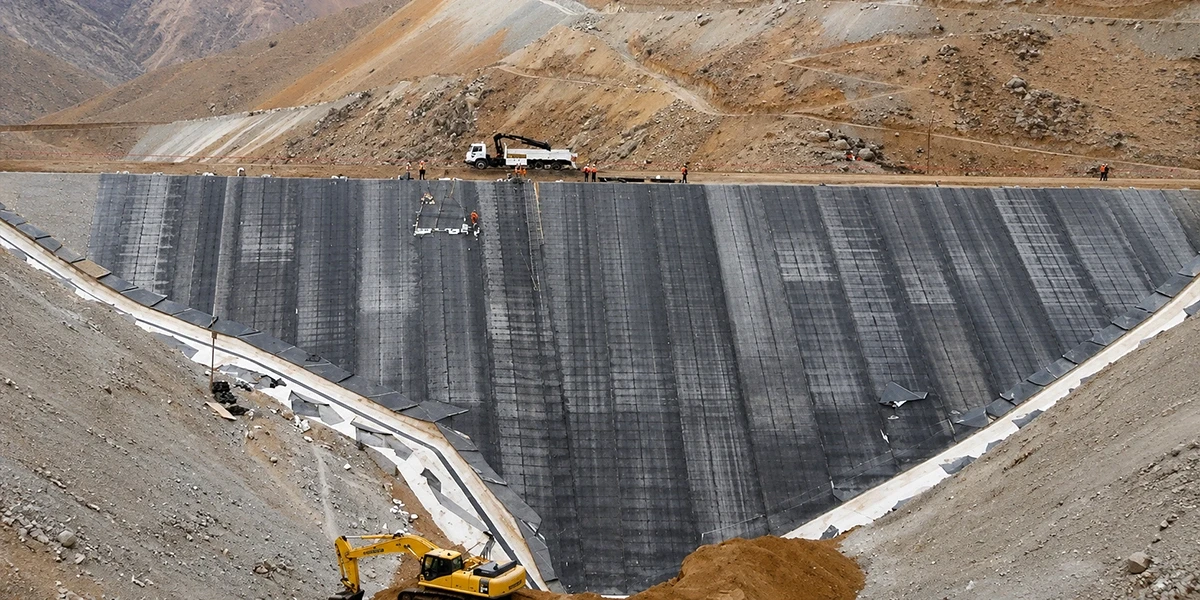
This is the part where theory meets dust, sweat, and propane torches. Here’s exactly what our installation sequence looks like on a typical Indian project site, whether it’s a coal ash pond in Odisha or a fish farm in Andhra Pradesh.
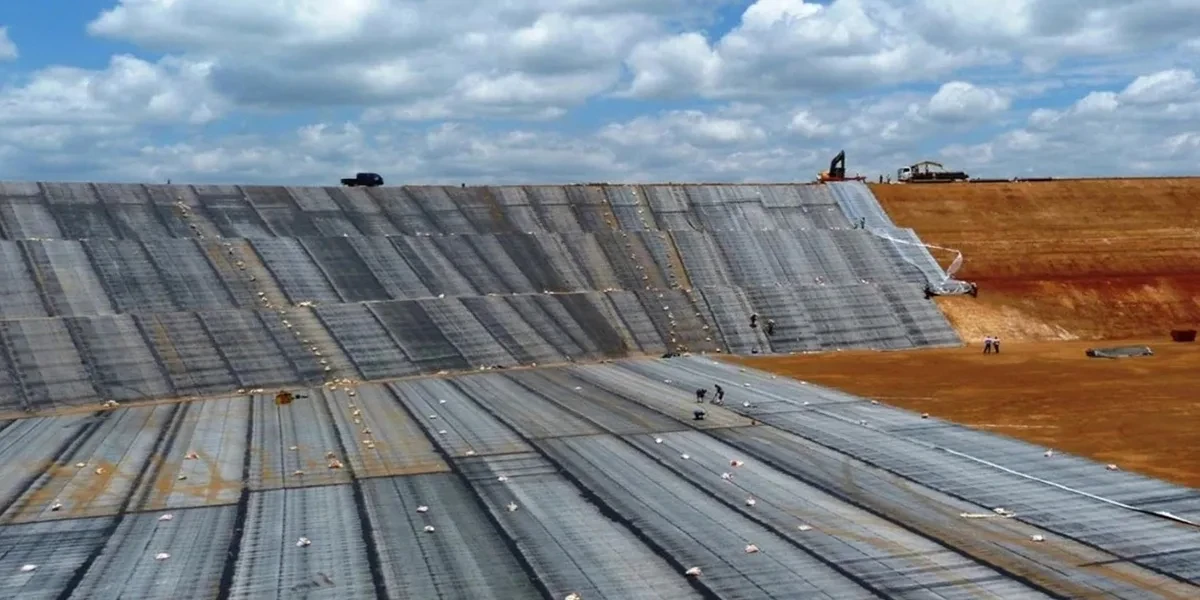
We dig anchor trenches around the entire perimeter, typically 500mm wide and 500mm deep, positioned roughly 1 meter back from the slope crest, providing the mechanical grip that prevents wind uplift and slippage when reservoirs are filled or emptied during operational cycles.
This trench is the seatbelt. Without it, your liner is just lying around hoping for the best.
Rolls arrive heavy. Really heavy. A standard BGM roll weighs around 250 to 350 kg, requiring mechanical handling equipment like telehandlers or specially designed roll dispensers to position sheets accurately along the prepared slope without dragging, folding, or stressing the membrane during deployment.
We unroll along the slope, never across it. Gravity is a friend here, not a fight.
Here’s where BGM completely outclasses plastic liners. Seams are bonded using controlled propane flame, which melts the bituminous underside just enough to fuse adjacent sheets into a monolithic, homogeneous membrane that essentially becomes one continuous waterproofing layer rather than overlapping pieces held together by mechanical adhesion or extrusion welds.
Overlap requirement? Minimum 100mm. Skilled torch operator? Absolutely non-negotiable.
A poorly trained welder can compromise an entire ₹40 lakh installation in an afternoon.
Every seam gets tested. We use vacuum box testing, spark testing, and visual peel inspections to confirm bond integrity across every linear meter of welded seam, because in our experience, leaks rarely originate in the sheet itself but almost always emerge from rushed, undertested, or contaminated seam zones.
Failed test? We re-weld. No arguments. No shortcuts.
Once seamed and tested, the membrane edges are tucked into the anchor trench and backfilled with compacted soil, locking the entire system in place against hydrostatic uplift, wind suction, and thermal expansion forces that constantly try to dislodge improperly anchored installations across India’s monsoon-prone topography.
This is the final handshake between liner and earth.
Curious what a typical install week looks like? Let’s set expectations honestly.
A medium-sized project of around 10,000 square meters typically takes 12 to 18 working days with a crew of 8 to 12 trained technicians, assuming reasonable weather and uninterrupted site access, though monsoon seasons across coastal Karnataka and Kerala can stretch timelines significantly without proper scheduling buffers built in.
We plan around your operations. Not the other way around.
Rain during welding? Disaster. Contaminated subgrade? Slow leaks later. Untrained labor? The single biggest cause of premature liner failure in Indian containment projects, accounting for an estimated 60% of warranty claims industry-wide according to internal data shared at the recent IGS India conference in Bangalore.
Our crews are factory-certified. Our equipment is calibrated weekly. Our quality logs go directly to clients.
We’ve installed BGM systems across Indian Railways embankments, NTPC ash dykes, aquaculture farms in coastal Andhra Pradesh, and irrigation canals throughout central India for projects ranging from 500 square meters to over 200,000 square meters in continuous deployment.
What do clients keep telling us? Two things. Our team shows up prepared. And we don’t disappear after handover.
Long-term performance matters. Annual inspections matter. Warranty documentation matters.
Is BGM Liner Installation the cheapest option? Not always upfront. Is it the smartest investment for 25-year containment integrity in Indian climatic conditions? Almost certainly yes, especially when you factor in the avoided cost of repairs, regulatory fines, environmental remediation, and reputational damage that haunt poorly executed Geomembrane liner projects across the subcontinent.
So before your next dam, pond, landfill, or canal project breaks ground, ask the right questions. About materials. About welders. About warranty.
Then call us. Because waterproofing Geomembrane work done right the first time is always cheaper than doing it twice.
Ready to specify BGM for your next containment project? Connect with Yooil Envirotech for site assessments, material specifications, and installation timelines tailored to Indian conditions.