

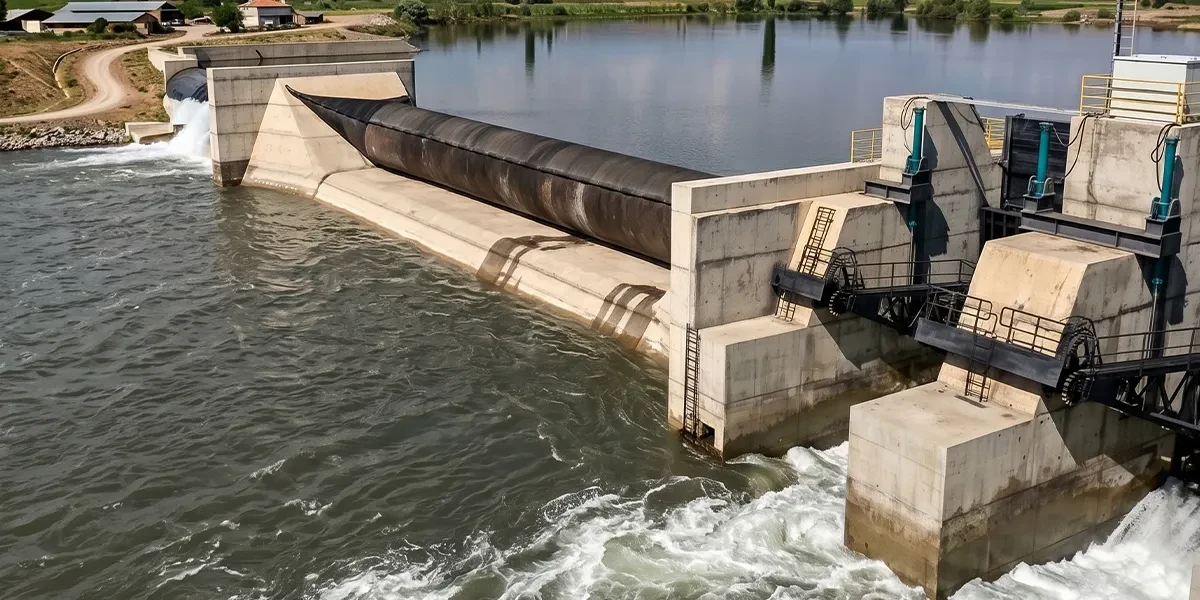
A river gives you water for four months. Your operations need it for twelve. That gap, between when water arrives and when it is actually needed, is the single most expensive problem in Indian water infrastructure today. And the answer, increasingly, is not more concrete. It is a rubber dam for water storage, an inflatable barrier that holds a river back when you need it and disappears flat onto its foundation when you do not.
More than 4,500 inflatable rubber dams are in service across the world. YOOIL alone has delivered over 300 rubber dam projects since 1989, from Gorakhpur to Sihora, as part of a 400+ project portfolio spanning four continents. This is no longer experimental dam technology. It is proven, bankable, and remarkably well suited to Indian rivers.
The numbers are uncomfortable. NITI Aayog estimates that nearly 600 million Indians face high to extreme water stress. India receives close to 4,000 billion cubic metres of precipitation annually, yet captures and stores only a small fraction of it, with the bulk of monsoon flow running straight into the sea within weeks. Agriculture consumes roughly 80% of the country's freshwater, leaving industry, energy, and urban utilities to compete for what remains.
For businesses, this translates into hard costs. Hydropower plants running below capacity in lean months. Mining and process industries trucking in water. Municipal bodies rationing supply. The monsoon is not the problem; the missing storage between two monsoons is. Seasonal river water storage, created exactly where the water flows, is the most direct fix, and rubber dams are the fastest way to build it.
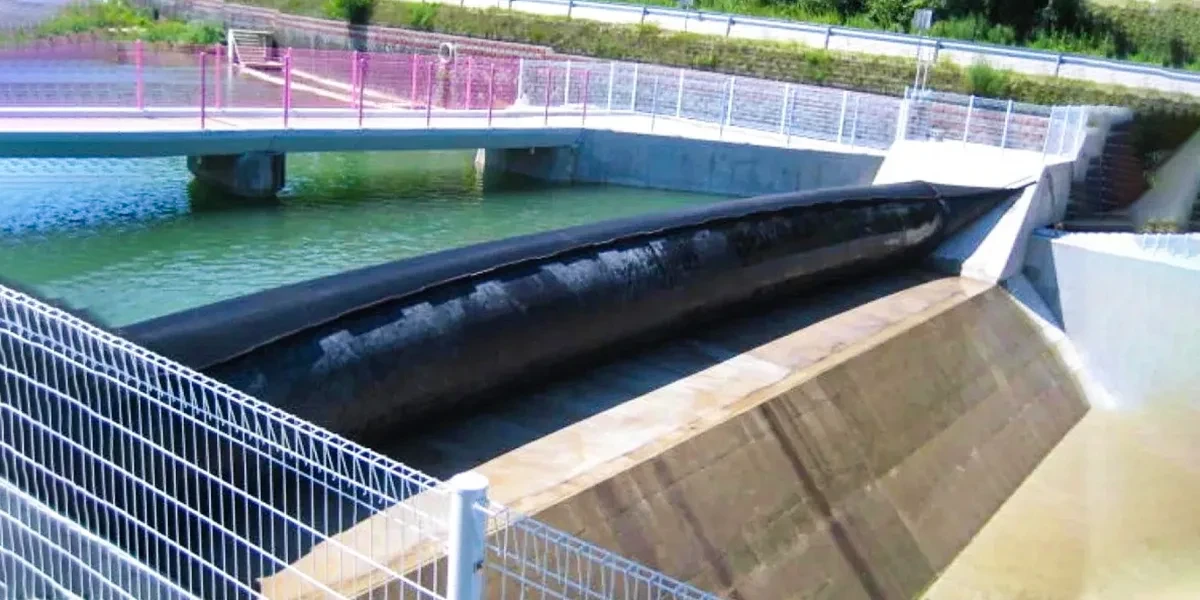
Rubber dams are flexible hydraulic structures that do the job of a weir, barrage, or check dam, without the rigidity of one. Picture an elliptical bladder fabricated from vulcanised layers of high-strength EPDM rubber reinforced with nylon fabric, anchored to a concrete raft across the riverbed with GFRP clamping plates and galvanised steel bolts. Inflate it with air, and it stands up as a watertight weir. Deflate it, and the river flows as if the structure were never there.
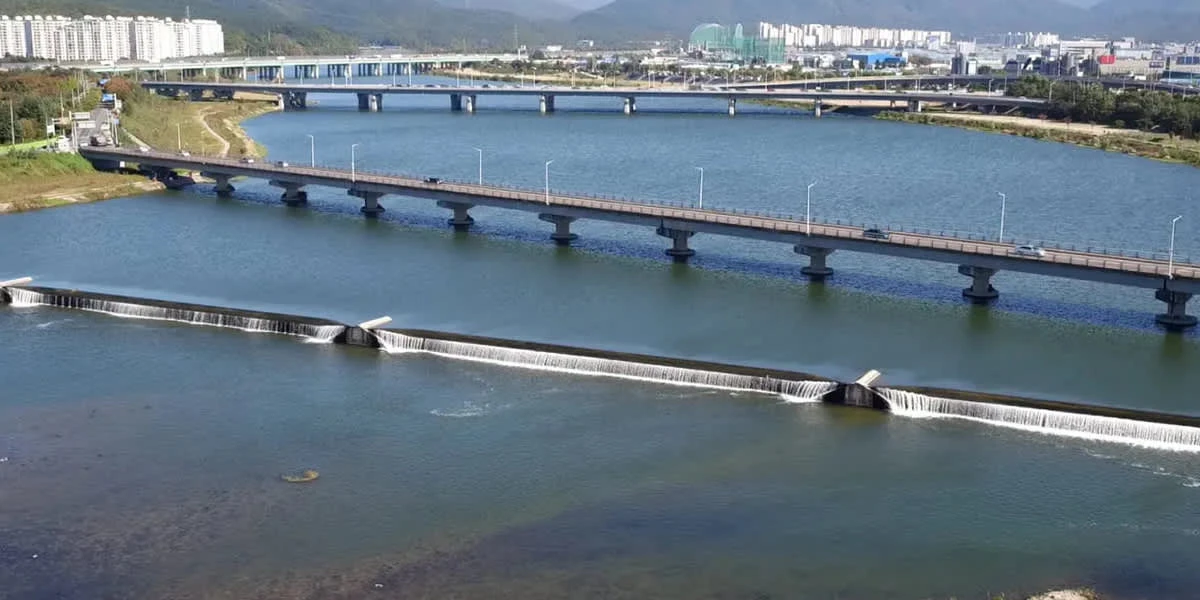
That reversibility is the entire philosophy. Conventional gates fight the river with steel, hoists, and moving parts. An inflatable rubber dam simply borrows the riverbed for the months you need it. No rusting components, no lifting machinery, no jammed gates during a flood peak, which, as any barrage operator will confirm, is precisely when steel gates choose to fail.
The operating principle is elegant. Low-power blowers, small enough to run on solar, pump air into the bladder through embedded nozzles and piping. Internal air pressure gives the dam its structural strength; the water load is transferred through the rubber body into the anchored foundation. From fully flat to full height takes just 30 to 40 minutes. Deflation is equally quick.
Three operating states matter for water management:
Modern installations integrate SCADA, with water level and pressure sensors feeding real-time data to a control room. Set your rule curve, and the dam inflates or deflates itself. It is the closest thing hydraulic engineering has to autopilot.
Rubber dams typically cost significantly less than equivalent gated structures, both upfront and over their lifespan. There are no gantry cranes, no hoist mechanisms, no painting cycles, and no corrosion to chase. Maintenance reduces to periodic inspection of a passive rubber body.
Once the concrete raft is cast, the bladder itself can be installed and commissioned within about two weeks, without heavy machinery. For a business calculating cost of delay, that schedule compression is often the deciding factor.
Deflation is a fail-safe, not a mechanism that can jam. During high floods, the dam flattens and the river takes its natural course, protecting both the structure and everything downstream. Sediment flushes through instead of silting up your pond.
Inflation pressure translates directly into pond level. Operators can hold, raise, or release water in fine increments, which is exactly what irrigation scheduling, turbine optimisation, and environmental flow compliance demand. Concrete cannot do this. Steel does it slowly and expensively.
Rubber dams preserve natural river form, permit fish movement when deflated, and support environmental flow releases, which increasingly matters for project clearances. Power demand is minimal, and solar-powered operation makes remote sites viable.
India does not lack water; it lacks the ability to hold water where and when it falls. Rubber dams close that gap with a structure that is faster to build, cheaper to run, safer in floods, and kinder to rivers than anything in the conventional toolkit. With over three decades of execution and 300+ rubber dam projects delivered, YOOIL Envirotech has turned this technology from a global curiosity into Indian infrastructure. For any business whose balance sheet depends on dependable water storage, the question is no longer whether rubber dams work. It is how soon one can be standing across your river.