

The sky darkens over Bengaluru in a matter of minutes. What starts as a welcome relief from the sweltering heat quickly morphs into an absolute logistical nightmare. Within less than an hour, a sudden, violent cloudburst drops months worth of rain onto asphalt roads, concrete flyovers, and choked stormwater drains. The city stalls. Luxury SUVs and humble commuter scooters alike float down the streets of Whitefield and Outer Ring Road like abandoned plastic toys. Basement parking lots transform into subterranean swimming pools, drowning multi-crore electrical panels, backup generators, and family vehicles.
This is not a rare, once-in-a-decade occurrence anymore. It is the exhausting new normal for urban India. From the devastating seasonal deluges in Delhi to Chennai’s annual December anxiety, our metropolitan hubs are quite literally drowning.
Traditional civil engineering is failing us. Standard brick walls, permanent concrete embankments, and heavy sandbags are too slow to build, too permanent for dynamic city landscapes, or simply too weak to fight back against unpredictable, fast-moving flash floods. When thousands of liters of muddy water rush toward a commercial complex or a residential colony, time is a luxury nobody has. Is there a faster, smarter way to shield our assets? Can temporary, rapidly deployable technology save our cities when the skies break open?
Let us look at the hard truth of what is happening on the ground and explore how Yooil Envirotech is stepping in with world-class, modern engineering with portable Flood Barriers to rewrite the rules of emergency water management in India.
Urban flooding in India is no longer an issue confined to predictable monsoon cycles. It happens rapidly, fueled by intense climate anomalies, concrete encroachment on natural lakes, and legacy drainage designs that can barely handle 15 to 20 millimeters of rain per hour. When a cloudburst unleashes upwards of 100 millimeters of water in a single hour, the system collapses instantly.
Consider the economic toll. According to global reinsurance reports, urban flooding in Indian cities incurs billions of dollars in annual losses, devastating businesses, retail shops, and public infrastructure. But behind these cold, hard macroeconomic statistics lie real people facing exhausting, repetitive disruptions.
"Every time the clouds look heavy, my chest tightens," says Rajesh, a resident welfare association member from a low-lying pocket in Delhi. "In 2023, the Yamuna overflowed, and our basement filled up with six feet of filthy water. The power backup was destroyed, and we spent weeks pumping out muck. We tried stacking hundreds of jute sandbags, but they soaked up the filthy water, tore apart, and left us with an even bigger mess to clean up. We need something that actually stops the water, not just absorbs it."
Rajesh is right. The ancient practice of stacking sandbags is labor-intensive, takes hours of manual sweat, and is highly prone to leaking. Once the water recedes, cities are stuck with thousands of contaminated sandbags that cannot be easily reused. They end up clogging the very drains they were meant to protect.
Municipal authorities face similar logistical hurdles. A senior municipal engineer from a major metro corporation, speaking on the condition of anonymity, summarizes the structural challenge:
"We cannot simply build permanent concrete walls around every metro station entry, underpass, or commercial street. It destroys the aesthetic of the city, restricts regular daily traffic, and requires massive capital outlays. What we desperately need are rapid-response tools. We need defense mechanisms that can be kept in storage and deployed on the roads within thirty minutes when the meteorological department issues an emergency red alert."
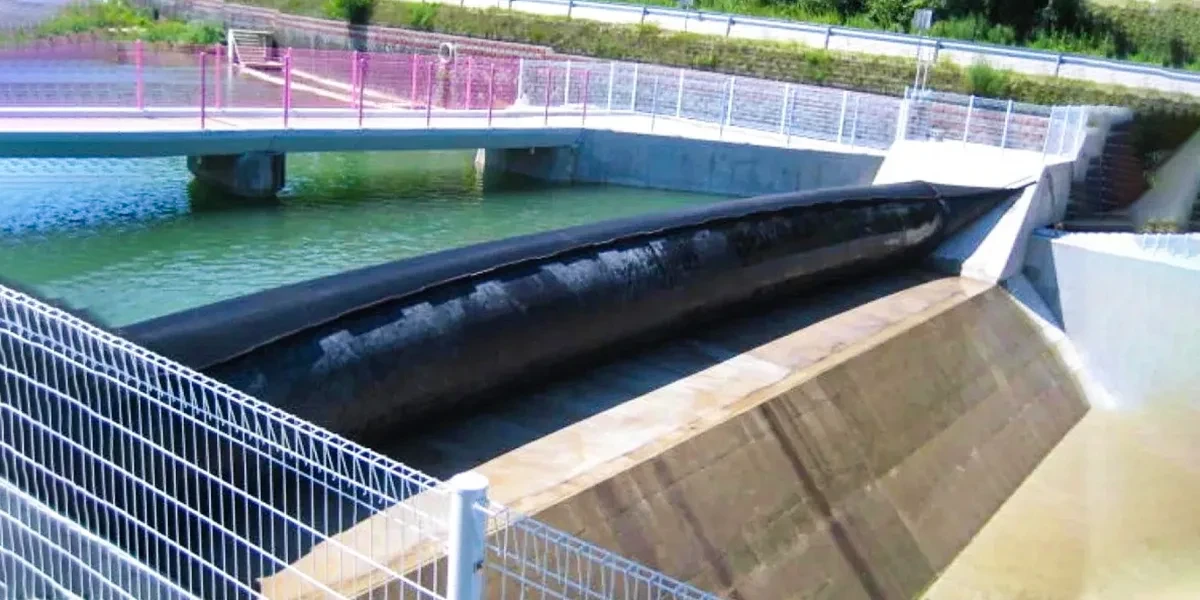
To survive these shifting weather patterns, Indian infrastructure must pivot toward flexible, modular, and reusable flood tech. This is precisely where modern engineered systems change the game. Instead of fighting water with heavy stone or concrete, these systems use the weight of the incoming floodwater itself to anchor a tough, impermeable membrane firmly to the ground.
At Yooil Envirotech, we have pioneered this exact shift toward modular asset protection. Backed by decades of global expertise since 1989 and over 400 successfully executed water management projects worldwide, we engineered the Yooil portable water Dam, a revolutionary alternative to single-use sandbags.
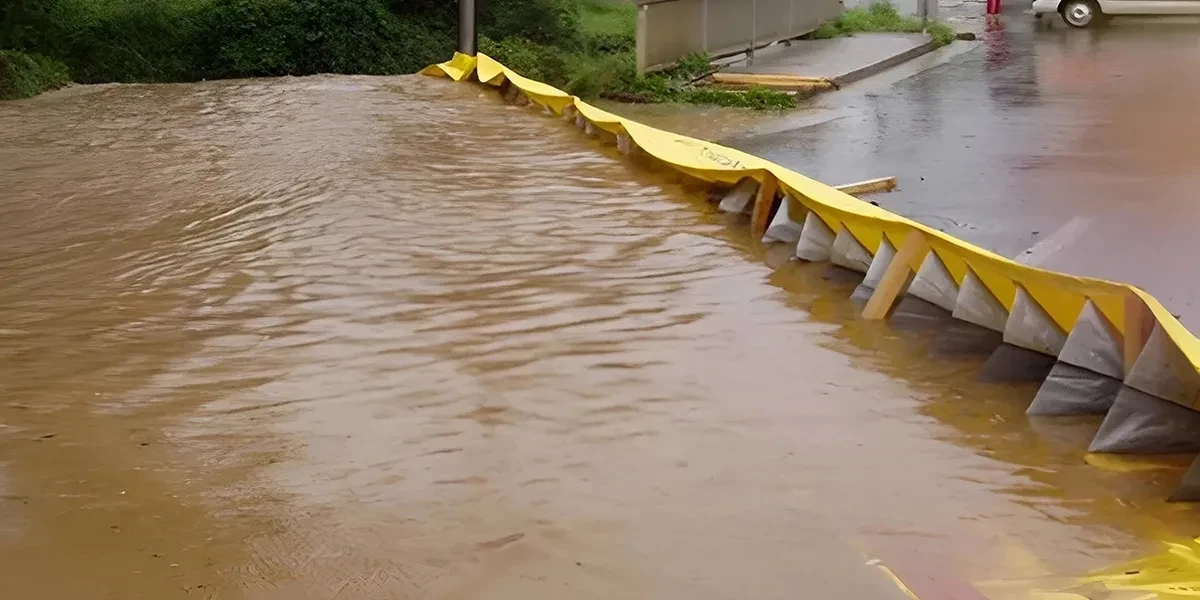
Instead of relying on an army of workers to shovel sand for hours, a small team of two or three people can easily unroll this lightweight, high-tensile material along a threatened perimeter. As the flash flood approaches and begins to fill the internal pockets, the geometric design of our Portable Flood Barriers utilizes the downward hydrostatic pressure of the rising water to seal itself tightly against the asphalt or concrete surface. The higher the water climbs, the tighter the barrier grips the floor, creating an immediate, impassable dam.
These systems change the fundamental timeline of disaster management. What once took half a day of grueling physical labor can now be completed in minutes. When a cloudburst strikes and a flash flood rushes down a sloping road toward a subterranean parking lot or a metro station foyer, these portable water barriers act as an instant barricade, deflecting the deluge away from vulnerable entrance points.
Indian cities are dynamic, densely populated, and heavily congested spaces. We cannot remodel old neighborhoods overnight to accommodate massive storm canals, nor can we widen streets that are already bursting at the seams. This is why flexible solutions from Yooil Envirotech present a highly practical solution for several distinct reasons:
When the weather is clear, our portable flood barriers sit neatly folded on pallets inside a small storage room, basement cupboard, or emergency response vehicle. They keep our walkways clear and preserve urban aesthetics.
When the sky opens up, a handful of security guards or municipal workers can deploy dozens of meters of protection in under fifteen minutes without needing specialized machinery or external power sources.
Unlike sandbags that must be discarded after a single use due to chemical and biological contamination, premium polymer barriers are easily washed down, dried, folded up, and stored away for the next emergency. They last for years.
Flash floods do not move in straight, orderly lines. They twist around building corners, follow curving alleys, and spill across uneven terrain. Yooil’s modular barrier systems can be bent, angled, and locked together to form a seamless, customized defense perimeter around any irregular architectural layout.
Where exactly should these modern tools be deployed to yield the maximum impact? Let us look at the most critical weak spots in our urban architecture:
The steep downwards ramp of a basement parking lot acts like a funnel for street runoff. Once water breaches the lip of the ramp, it quickly floods expensive electrical switchgears, structural elevators, and hundreds of parked vehicles. Placing a modular water barrier right at the top of the ramp creates a secure boundary line, redirecting water back into the municipal street grid.
Urban underpasses regularly trap unsuspecting motorists during sudden cloudbursts, turning into deadly water zones within minutes. Similarly, staircase entrances to underground metro networks are highly vulnerable to inflows. Deploying quick-assembly barriers around these key access points keeps transit systems running smoothly and protects commuters from getting stranded.
For IT parks and manufacturing facilities, even an hour of water ingress can ruin expensive server infrastructure, precision tooling, and valuable inventory, leading to massive financial shortfalls. Having a localized stash of reusable barriers gives facility management teams the independent power to secure their perimeters without waiting for municipal aid to arrive.
We can no longer afford to treat urban flooding as an unpredictable "act of God" that we simply have to endure every single year. The meteorological data clearly indicates that intense, concentrated cloudbursts will continue to test our urban centers with increasing frequency.
Building massive concrete infrastructure takes years of planning, massive budgets, and disruptive land acquisition. While those long-term infrastructure projects slowly move through bureaucratic channels, our cities need an immediate, dependable line of defense today.
By integrating smart, portable water barriers and modular gates into standard municipal protocols and corporate disaster safety mandates, India can build a highly resilient, adaptive defense network. Yooil Envirotech is proud to manufacture these cutting-edge, "Make in India" technologies, tailored specifically to handle the rugged challenges of our urban environments. It is time to retire the outdated, leaking sandbag and welcome the era of smart, reusable engineering. Let us secure our assets, protect our communities, and ensure that the next sudden downpour does not catch our cities off guard.