

Picture this. It’s July. The Yamuna swells past warning levels for the eighth time in a decade, and somewhere in Delhi, a family is wading through knee-deep water carrying their refrigerator on a charpoy. Sounds dramatic? It isn’t. According to the Central Water Commission, India loses roughly ₹5,649 crore every single year to floods, and over 40 million hectares of land sit permanently at risk. That’s nearly one-eighth of the country. Soaking. Sinking. Suffering.
So here’s the uncomfortable question. Why are we still relying on concrete barrages designed in the 1960s when the climate clearly didn’t get the memo?
This is exactly where the flood mitigation inflatable rubber dam quietly changes the conversation. Not with hype. With results.
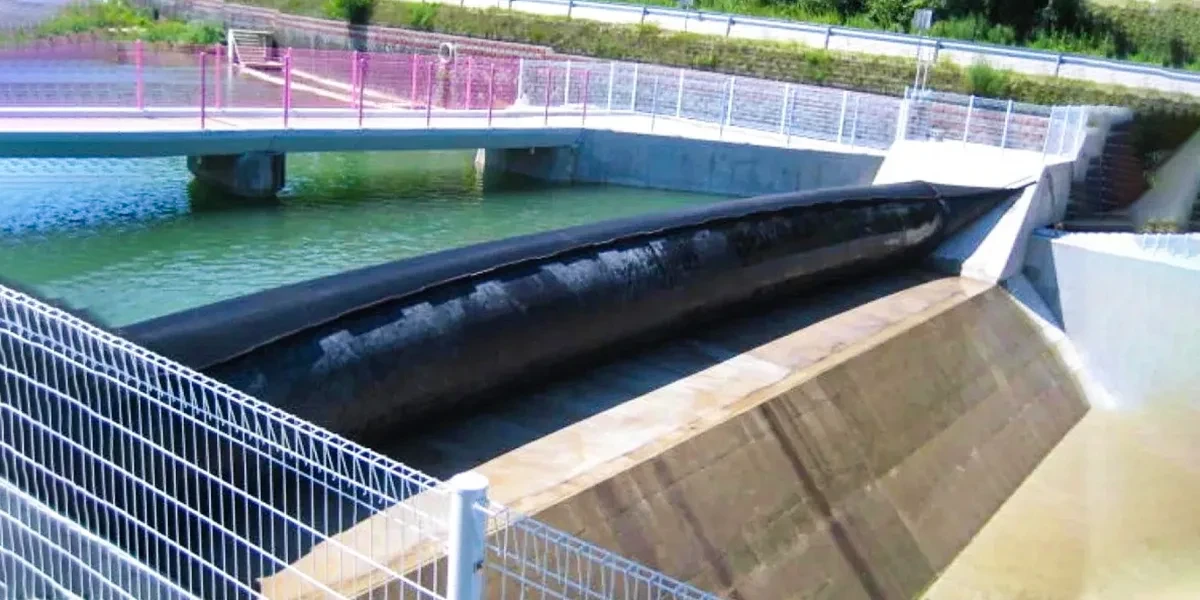
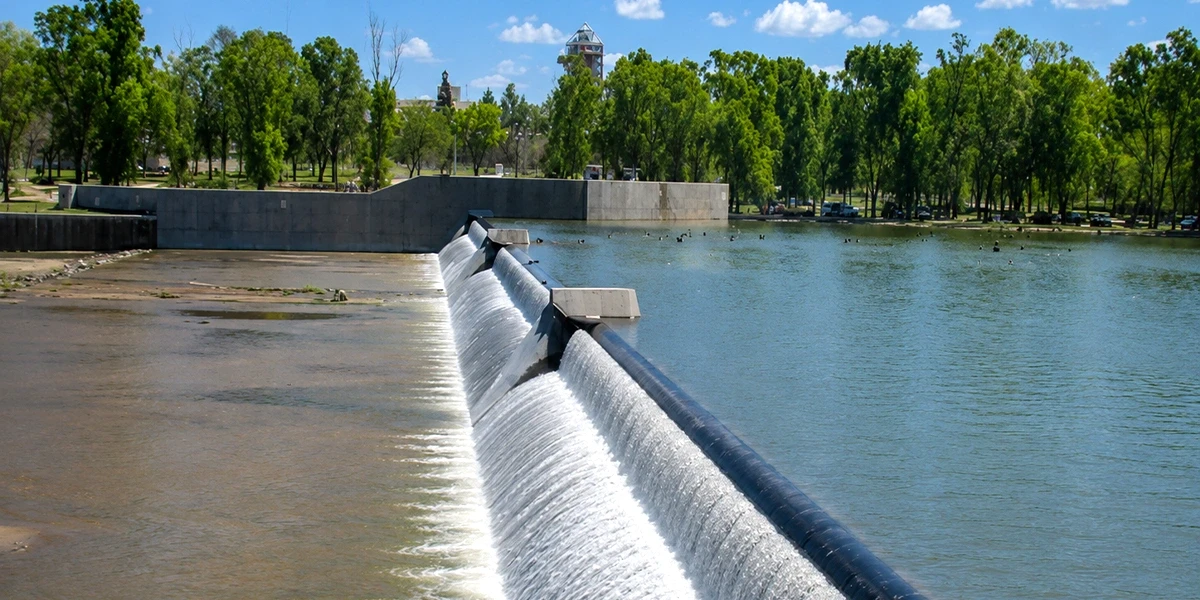
Think of it as a giant, reinforced rubber bladder anchored to a concrete sill across a river or canal. Air or water inflates it. It rises. It holds back floodwater, stores irrigation supply, or diverts surges away from vulnerable settlements. When the danger passes, it deflates flat against the riverbed in minutes. No gates jamming. No motors seizing during the worst possible storm.
Yooil Envirotech has been engineering these systems for decades, and we’ve watched them outperform traditional steel gates in nearly every metric that matters. Lower maintenance. Faster deployment. Far better lifespan in corrosive, silt-heavy Indian waters. Honestly, once you’ve seen one work during a real flood event, the old way starts looking a bit silly.
Let’s skip the theory. Here’s what’s actually happening on the ground.
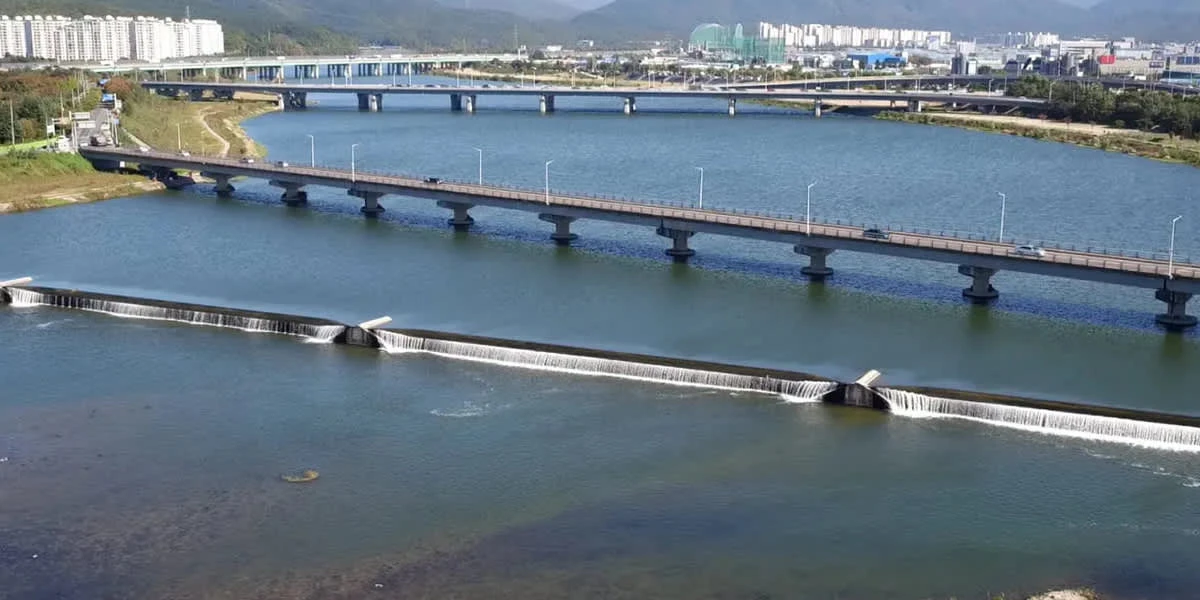
In South Korea, Yooil’s installations on rivers facing monsoon patterns eerily similar to India’s have managed flood peaks for over 20 years with minimal intervention. One particular weir handled a 1-in-50-year flood event in 2020. It deflated automatically. The town downstream stayed dry. That’s not luck. That’s design.
States like Gujarat, Tamil Nadu, and Maharashtra are now piloting inflatable rubber dam flood control systems on tributaries of the Sabarmati, Cauvery, and Godavari. Early data from these pilots shows up to 60% reduction in localized flood damage during peak monsoon, alongside a 35% improvement in dry-season water retention for irrigation. Farmers downstream report something they hadn’t felt in years. Predictability.
A study published in the Journal of Hydraulic Engineering found that inflatable weirs reduce sediment buildup by nearly 70% compared to fixed barrages. Less dredging. Lower operational cost. Cleaner river ecology. Win, win, win.
Here’s where it gets interesting. India’s flood-affected area has expanded from 19 million hectares in the 1950s to over 49 million today, per NDMA reports. The population in floodplains has tripled. Urban drainage capacity has barely moved.
Meanwhile, a single inflatable rubber weir installation can:
That last point matters more than people realize. Pneumatic systems with backup compressors don’t care if the grid is down. Try saying that about motorized steel gates during a cyclone.
Floods aren’t polite. They don’t always hit the same place twice. This is why the portable dam system approach is genuinely revolutionary for disaster response.
Imagine a modular rubber dam unit that can be transported by truck, anchored within 48 hours, and deployed across a swollen drain, a breached embankment, or even an urban underpass. Yooil’s portable configurations have been used internationally for emergency cofferdams during construction, temporary flood barriers around critical infrastructure, and even seasonal irrigation diversions in agricultural belts.
Will this replace permanent infrastructure? No. Should it supplement it? Absolutely yes.
Here’s something most flood discussions miss entirely. The same structure that holds back floodwater can store it for the dry months. India loses an estimated 65% of its annual rainfall to runoff. 65%. Into the sea. Wasted.
A reliable flood irrigation dams manufacturer like Yooil designs systems that do both jobs without compromise. During the monsoon, the dam deflates progressively to manage peak flow. Post-monsoon, it inflates fully to retain water for command-area irrigation. Farmers in Andhra Pradesh trials reported a 22% increase in rabi-season yield after a rubber weir was installed on a minor tributary. That’s not a small number when you’re feeding a village.
Honestly? Mostly awareness. And a bit of bureaucratic inertia. Many state irrigation departments still write tenders specifying steel gates by default, simply because that’s what the standard manual recommends. Rubber dam technology, despite being globally proven since the 1950s and continuously refined since, often has to fight to even appear on the bid list.
That’s changing. Slowly. But it needs to change faster.
Floods aren’t going away. Monsoons are getting moodier. And the infrastructure built for our grandparents’ rainfall patterns is, frankly, struggling.
Flood mitigation inflatable rubber dam technology isn’t a silver bullet. Nothing is. But it’s a smart, proven, surprisingly affordable piece of the puzzle that Indian water management has been slow to embrace. The project works. The numbers stack up. The engineering is mature.
Maybe it’s time we stopped admiring the problem and started implementing the solution.
Ready to talk specifics for your district, dam site, or canal command area? Yooil Envirotech is one conversation away.