

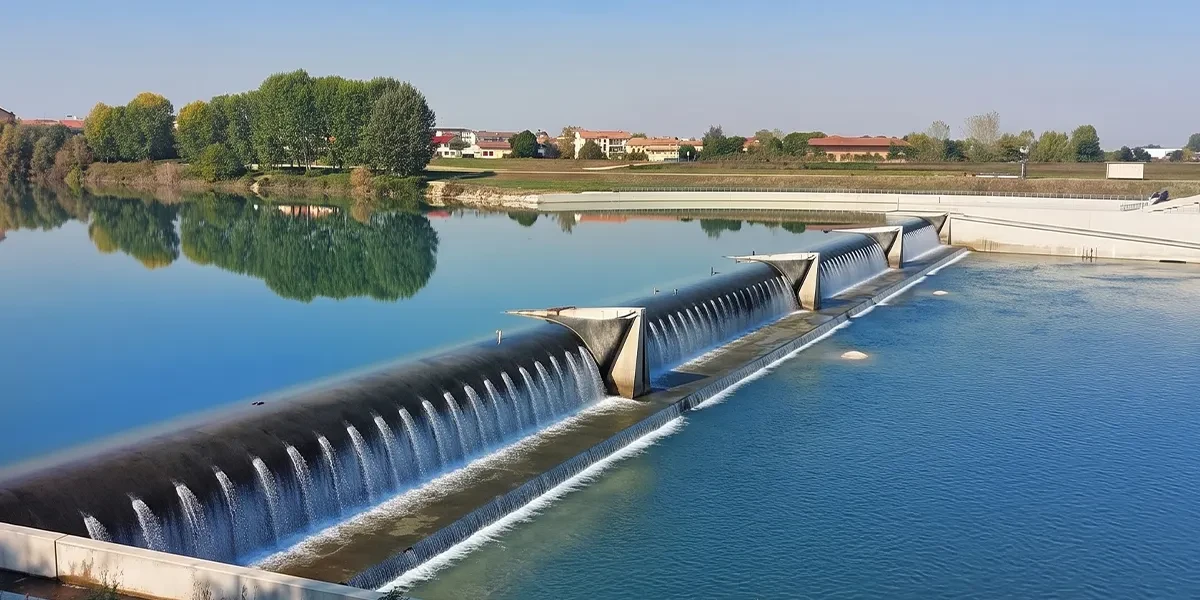
No two rivers behave the same way, yet a surprising amount of water infrastructure is still bought as if they do. A catalogue product quietly assumes the site will adapt to the dam. A serious project reverses that logic and asks the dam to adapt to the site. That single reversal is where a custom rubber dam earns its keep. The rubber body is only the visible half of the story. The half that decides whether a structure holds its head through thirty monsoons is settled long before fabrication, on a drawing board, where engineers convert one specific river's data into one specific set of decisions. This is the quiet discipline behind custom rubber dam solutions, and it rewards a closer look.
Before a single panel is cut, a river hands the design team a brief written entirely in numbers. Channel width sets the required span. The head to be impounded sets the working height. Peak flood discharge sets the afflux the structure is allowed to create upstream, a figure irrigation departments watch closely, because excess afflux floods land that nobody agreed to flood. Then come the variables that resist easy tabulation: silt and sediment load, floating debris, foundation strength, seismic zone, and the flow regime across a monsoon-driven year. A structure sized for a placid post-monsoon stream would be reckless on a flashy Himalayan tributary rolling boulders downhill. This is exactly why project-specific rubber dams exist. The brief is never generic, so the answer cannot be either.
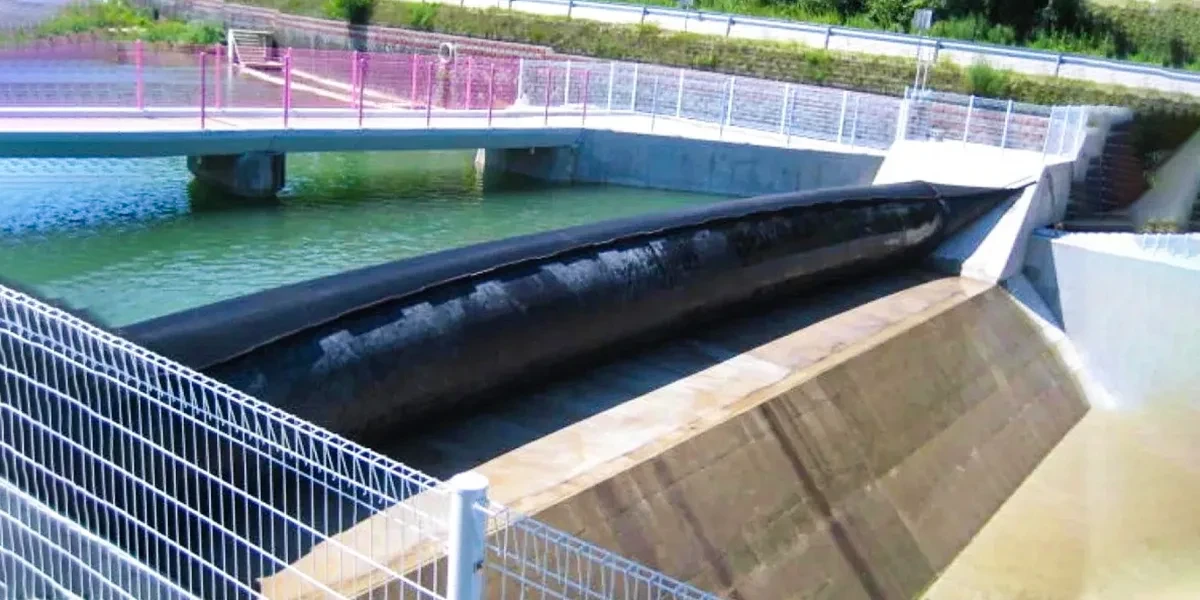
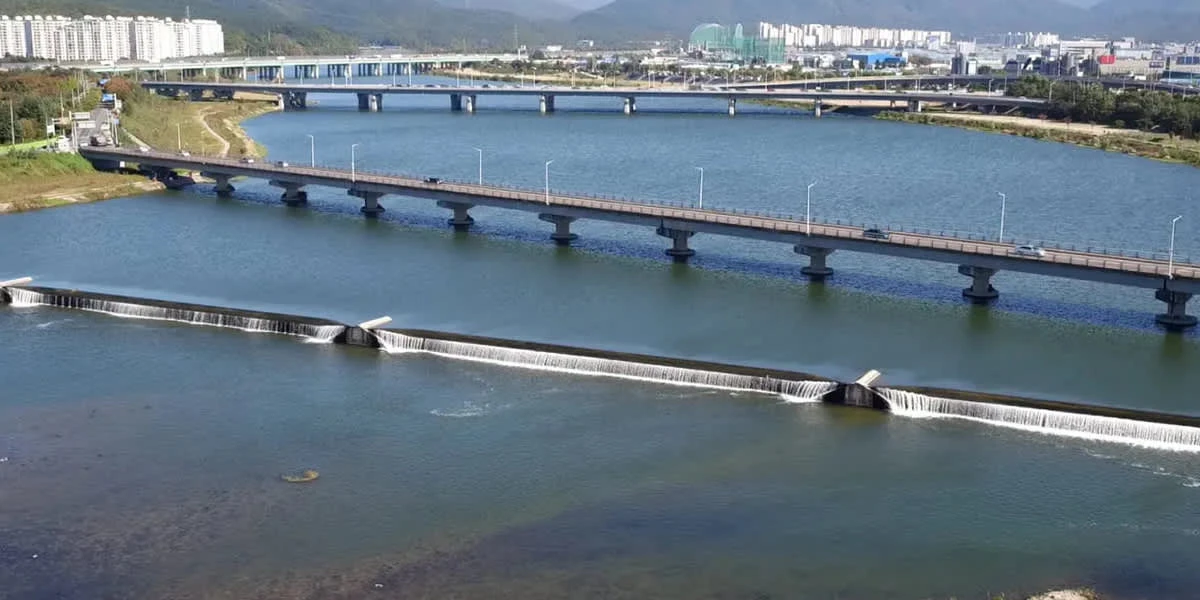
Good rubber dam engineering is the craft of pulling the right levers in the right order. Height-to-span ratio comes first, because it governs the deflection profile, meaning how the inflated body curves under load and how cleanly it collapses when deflated for flushing. Wide channels rarely accept a single bay, so multi-bay layouts with intermediate piers keep each span within safe deflection limits and let operators manage flow section by section. Ply build-up is tuned next, with extra abrasion layers on the upstream face where silt scours hardest and reinforcement concentrated where clamping loads peak. Anchor and clamp detailing is then matched to the raft and to the hydrostatic pull it must resist for decades.
Finally, the control philosophy is fixed, ranging from simple manual inflation to a fully instrumented SCADA loop that reads water level and internal pressure in real time. Each of these is a deliberate choice rather than a default, and together they add up to a customized dam design that a shelf product cannot replicate.
Design decisions look tidy on paper and rarely survive first contact with a real site. The survey says one thing, the trial pit says another, and the flood of record turns out to be higher than the record. The genuine advantage of engineered water control systems built in-house is the short distance between the person who drew a detail and the person who fabricates it. When Yooil's in-house design and execution teams share the same project file, a revised anchor detail or an added abrasion ply moves from sketch to production without a contract variation and without a month of correspondence. Iteration becomes inexpensive, which means the design keeps improving until it genuinely fits the river, rather than freezing at the first version a fragmented supply chain will agree to build. That tight feedback loop is difficult to reproduce across four separate companies on three continents, and it is a large part of why in-house engineering tends to produce better-fitted structures, not merely faster ones.
An Indian tender adds constraints of its own, and the strongest custom rubber dam solutions are designed around them rather than despite them. The country concentrates most of its rainfall into a handful of monsoon months, so the pre-monsoon installation window is unforgiving. A rubber body that installs within roughly two weeks of the raft being ready can protect a full year of storage that a delayed steel gate would forfeit. Sediment management is designed in from the start, not bolted on afterwards, because a dam that cannot flush silt during high flow slowly buries its own reservoir. Control systems are specified to the operator's real capacity, whether that is a SCADA console or a trained field team, and the low power draw of an air-filled dam, small enough to run on solar, keeps remote sites viable. Yooil has applied exactly this thinking across projects such as the Gorakhpur and Sihora rubber dams and canal works at Pench and Theonthar, part of more than 400+ projects the company has delivered since 1989.
A rubber dam bought off a shelf is ultimately a guess about a river. A rubber dam engineered to a site is an answer to one. The difference does not show on the day of commissioning, when almost any structure holds water in calm weather. It shows in year seven, in the flood that arrives early, in the silt that would have choked a lazier design. Choosing project-specific rubber dams means letting the river set the specification and then meeting it precisely, variable by variable. That is what Yooil Envirotech's in-house engineering is built to do, and it is what turns a flexible rubber barrier into water infrastructure genuinely worth trusting for the next three decades.