

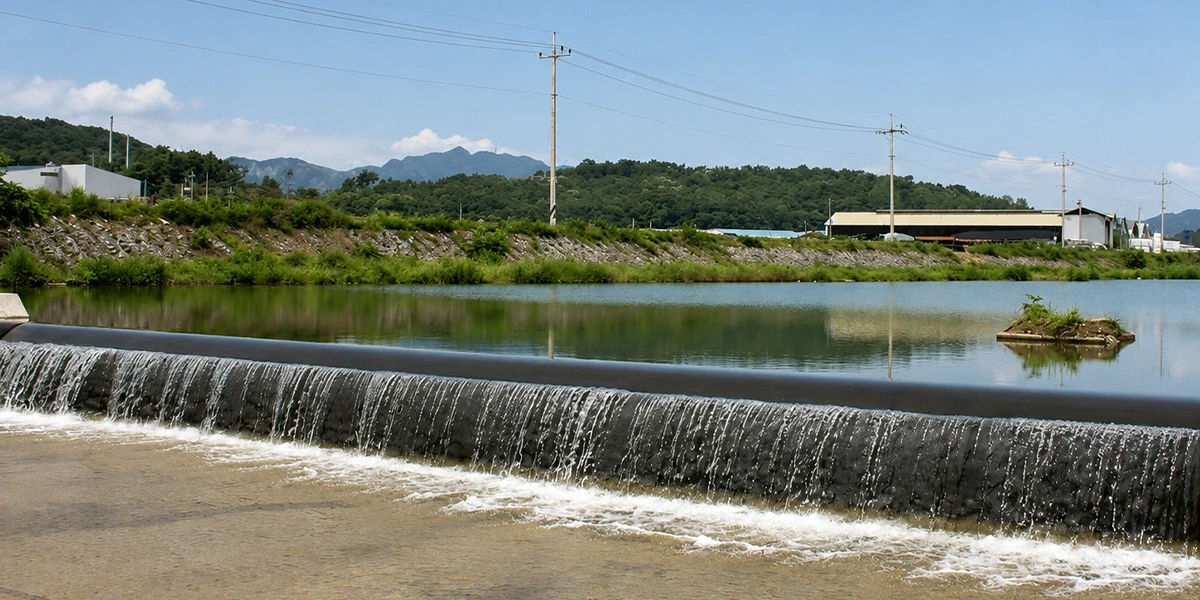
Water infrastructure is being asked to do too much, too often, under conditions that keep getting rougher. More erratic rainfall. More exposed floodplains. More pressure on irrigation networks. More scrutiny on lifecycle cost. In that climate, Air filled rubber dams feel less like a niche option and more like a practical engineering answer hiding in plain sight. For a company like Yooil Envirotech, which positions itself around smart water management and has roots in YOOIL Engineering South Korea, the case is especially relevant in 2026, when adaptable infrastructure matters as much as raw structural strength.
This is the uncomfortable truth. Water risk is no longer a seasonal headache. It is a planning condition. The World Bank estimates that 1.47 billion people are directly exposed to intense flood risk, while UN-Water notes that about 4 billion people experience severe water scarcity at least one month each year. On top of that, agriculture still accounts for 72% of global freshwater withdrawals, which means every controllable drop matters. Engineers in 2026 are not just designing for normal flow. They are designing for volatility, recovery speed, and operational flexibility. That is exactly where a water management inflatable rubber dam earns attention.
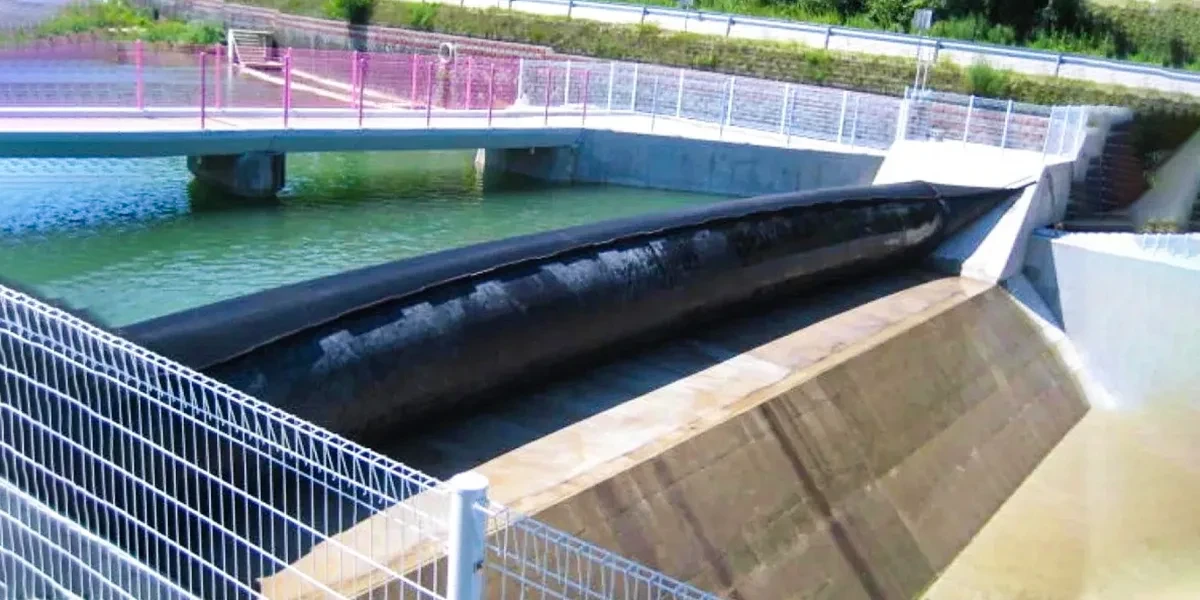
At a basic level, these systems are inflatable hydraulic structures fixed to a concrete base and raised with air to act as a weir. Sounds simple. That simplicity is the charm. When inflated, they retain water upstream. When deflated, they allow flood passage and can support sediment flushing. According to Yooil, their rubber dams are built from high-strength rubberized materials and can be installed rapidly after raft construction, with inflation and deflation completed in roughly 30 to 40 minutes. In a field crowded with rigid, maintenance-heavy hardware, that responsiveness is a serious advantage, not a footnote.
That matters more than most brochures admit. Yooil describes itself as a subsidiary of YOOIL Engineering South Korea, founded in 1989, with 400+ projects worldwide, and highlights end-to-end capabilities spanning design, manufacturing, supply, installation, and maintenance. It also notes milestones such as India’s first air-filled rubber dam project in Uttar Pradesh and Maharashtra’s first air-filled rubber dam work order. For public agencies, EPC teams, and consultants, that signals something useful: not just equipment supply, but implementation familiarity.
Cost always enters the room early. But it should not enter alone. It is equally important to know that Yooil emphasizes lower capital demand than traditional concrete structures, low power requirements because only small blowers are needed, and the absence of moving parts that usually complicate upkeep. The Association of State Dam Safety Officials has also described inflatable dams as an economical solution for new projects and for replacing older spillway crest gates, with over 2,000 inflatable dams in service worldwide and over 10,000 years of collective service experience in the paper it catalogs. That is not speculative enthusiasm. That is accumulated field evidence.
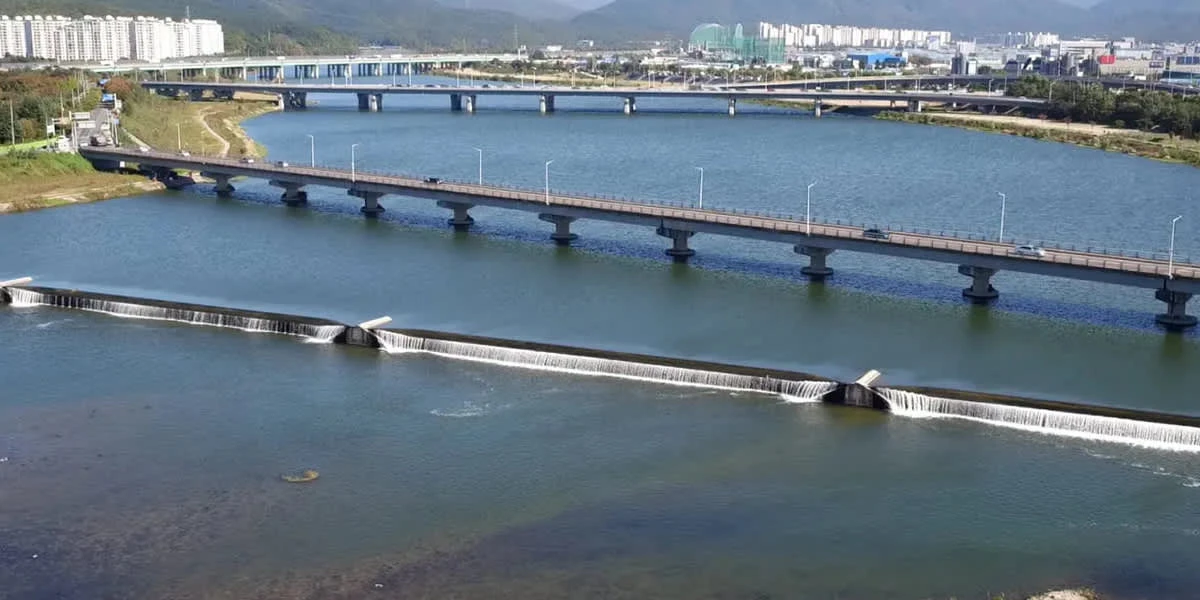
Here is where the discussion gets deliciously practical. Air-filled systems are generally simpler to design and construct than water-filled ones, need less complex piping, inflate and deflate faster, use less rubber for the same height, and require a narrower foundation. Water Power & Dam Construction also notes that long rubber dams can span broad rivers without intermediate piers, unlike steel gates that often need piers roughly every 20 meters. Less clutter. Less civil disruption. More geometric freedom. Engineers love that, even when they pretend they only care about spreadsheets.
And this is the part many decision-makers underestimate. Rubber dams are described as more earthquake-resistant than comparable rigid structures because of their lighter upper structure and more uniform load behavior. They also perform well in cold climates, where steel gates can become troublesome, and they can absorb drift-ice impact through deformation before recovering shape. Minimal maintenance is another recurring advantage: no painting, no greasing, no lubrication ritual dragging on year after year. For operators who think in decades, that is a persuasive story.
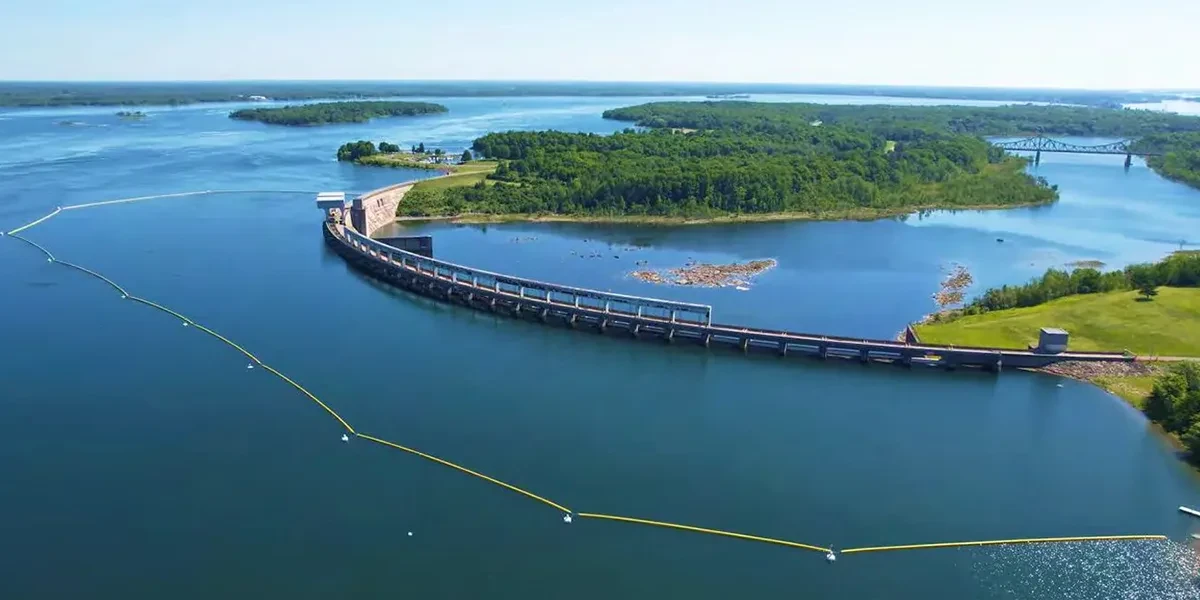
The uses are broad, but not vague. Rubber dams are commonly used to temporarily increase storage, divert water for irrigation, provide flood control, and create recreational or managed reservoirs. Yooil also highlights groundwater recharge, reservoir capacity enhancement, river rejuvenation, drought mitigation, hydropower diversion, and steady supply for domestic and industrial use. Put plainly, a capable flood irrigation dams manufacturer is no longer selling a single barrier. It is delivering a flexible operating layer for a river, canal, or low-head water system.
Concrete still has its place. No serious engineer denies that. Still, many projects in 2026 need something lighter on ecology and faster on execution. Yooil argues that rubber dams preserve more natural flow behavior and support ecological goals such as fish migration and aquatic habitat continuity. UNICEF and UN-Water, from a broader systems perspective, point toward the need for climate-resilient water storage, groundwater support, lower distribution losses, and smarter management under scarcity. So the appeal is not just mechanical. It is strategic. A water management inflatable rubber dam fits the era because it gives operators a way to adapt instead of overbuild.
Some infrastructure choices are flashy. This one is quietly clever. Air filled rubber dams offer quick operation, low maintenance, flexible water-level control, reduced structural complexity, and meaningful applicability across flood control, irrigation, recharge, storage, and environmental restoration. In 2026, that mix feels unusually well-timed. Yooil’s project background, regional positioning, and turnkey model make the company worth watching for agencies and developers seeking responsive water infrastructure that can do more than one job well. And honestly, that is the sort of engineering practicality the industry needs more of, not less.